My Sim Racing Cockpit - Formula FX1
I’ve loved cars for as long as I can remember. My first real contact with racing games was at the arcades of the 80s and 90s. And when I say “real,” I mean sitting at a cabinet with a wheel, pedals, a hard plastic seat and the screen wrapping in front of you. OutRun (1986), Rad Mobile (1991), Virtua Racing (1992), Ridge Racer (1993), Daytona USA (1994), Scud Race (1996). Every one of those games left a mark on me. But Daytona USA stuck in a different way. That twin cabinet, two machines side by side, the “DAYTONAAA, let’s go away” track blasting through the arcade, the wheel rumbling in your hand. I still remember it.

But the game that really got me hooked on the simcade genre was the original Gran Turismo, in 1997, on the PlayStation 1. “The Real Driving Simulator” on the cover. I played that game obsessively. Around the same time I was watching the Initial D anime, which premiered in 1998 in Japan. I bought every manga volume and read all of it from start to finish. The story of Takumi Fujiwara going down Mount Akina at dawn delivering tofu in his father’s AE86 is, to me, one of the best motorsport stories ever told in any medium.
I still follow Shuichi Shigeno’s work today. After Initial D came MF Ghost (2017-2025), set in the same universe but in a near future where combustion cars have become museum pieces. And now, since July 2025, I’m reading Subaru and Subaru, the direct sequel that ties the Initial D and MF Ghost universes together with two protagonists named Subaru — one from Gunma, one from Kanagawa — competing in a new racing series. It’s Shigeno at his best.

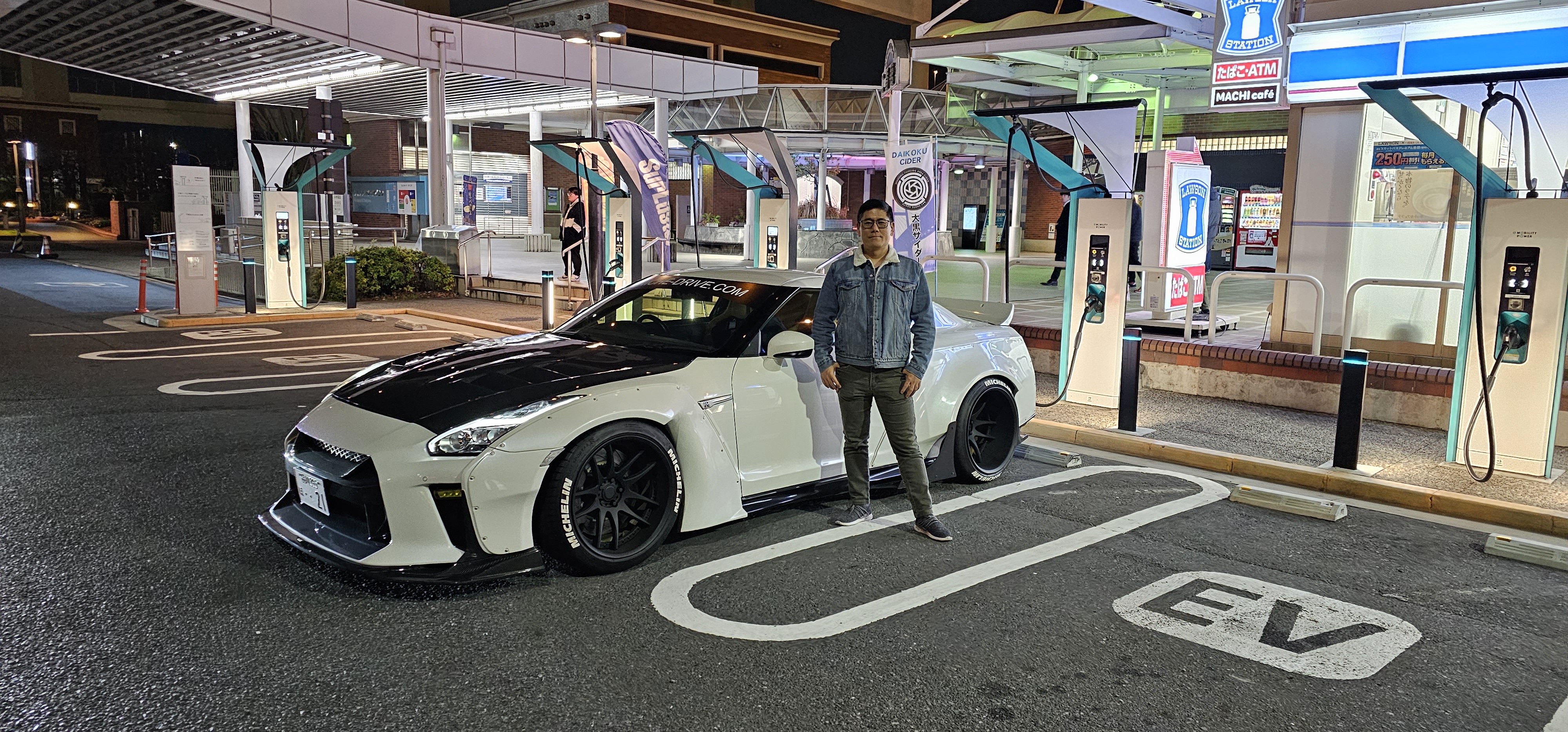
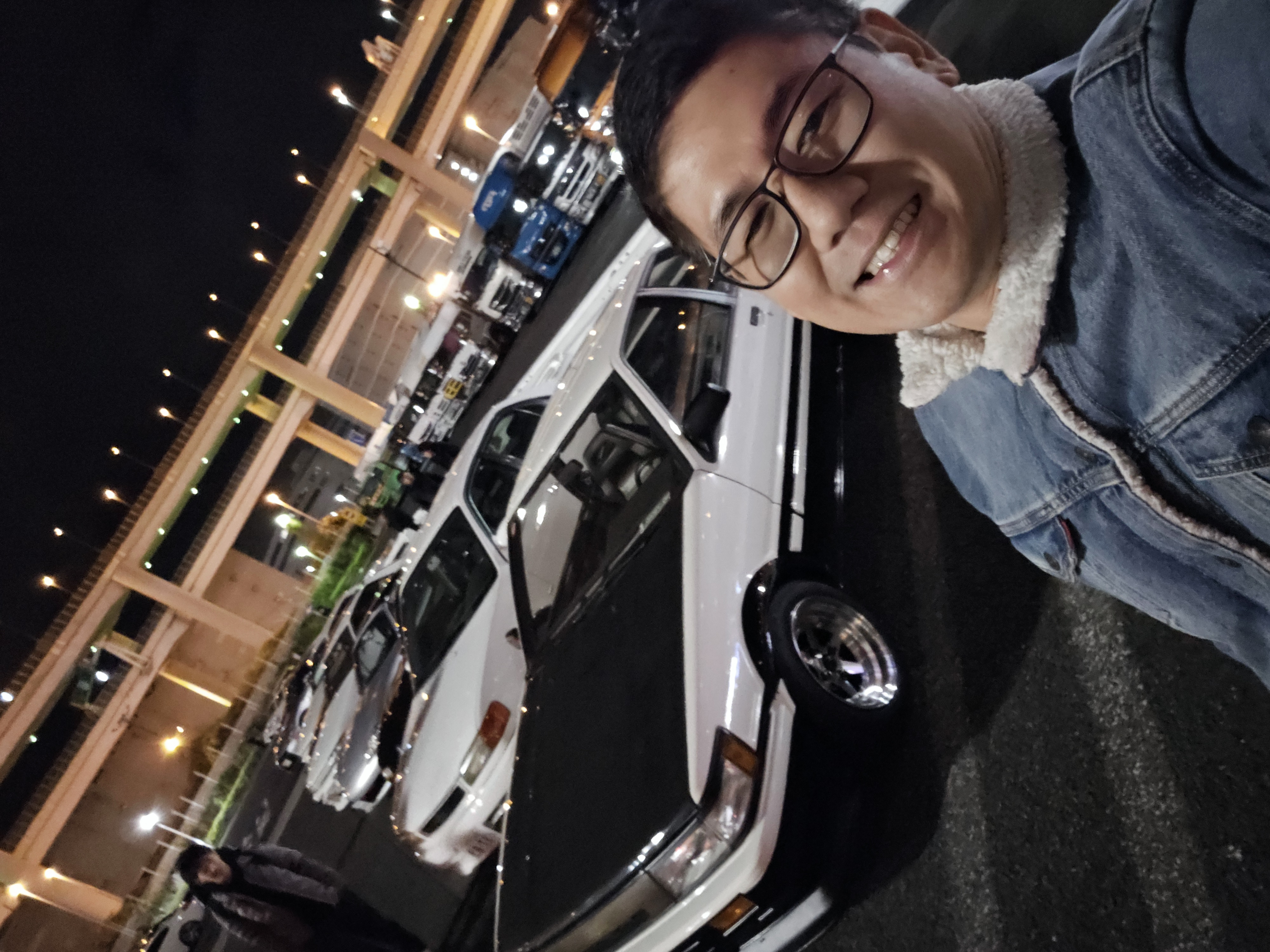
Two years ago I traveled to Japan with my girlfriend and made a point of going to Daikoku PA, the famous parking area on the Shuto Expressway in Yokohama where the JDM culture concentrates. As an old fan of Tokyo Xtreme Racer, by Genki, I needed to see Daikoku with my own eyes at least once. And it didn’t disappoint. Instead of renting a car, we booked a tour with a local guide in his prepped Nissan GT-R. Better that way. On the drive there he explained the history of the Wangan, how the scene works, what’s YouTube exaggeration and what’s real. When we got there on a Friday night and I saw the whole thing in person — Skyline R34, RX-7, Supra, GT-R, tuned kei trucks, insane bosozoku — the feeling was strange in the best possible way. It looked like Tokyo Xtreme Racer, except with the smell of fuel in the air and the sound of real exhaust pipes.
And there’s another detail: I’m playing the new Tokyo Xtreme Racer reboot on PC, and it’s exactly the kind of game that understands its own audience. Strong single-player campaign, addictive progression, the right vibe, and none of the loot box nonsense. I’d recommend it without hesitation. For the same reason, I’m also really looking forward to Forza Horizon 6, which this time is going to be set in Japan. I’ve already pre-ordered it and I can’t wait to play it on the new cockpit.
Driving for real
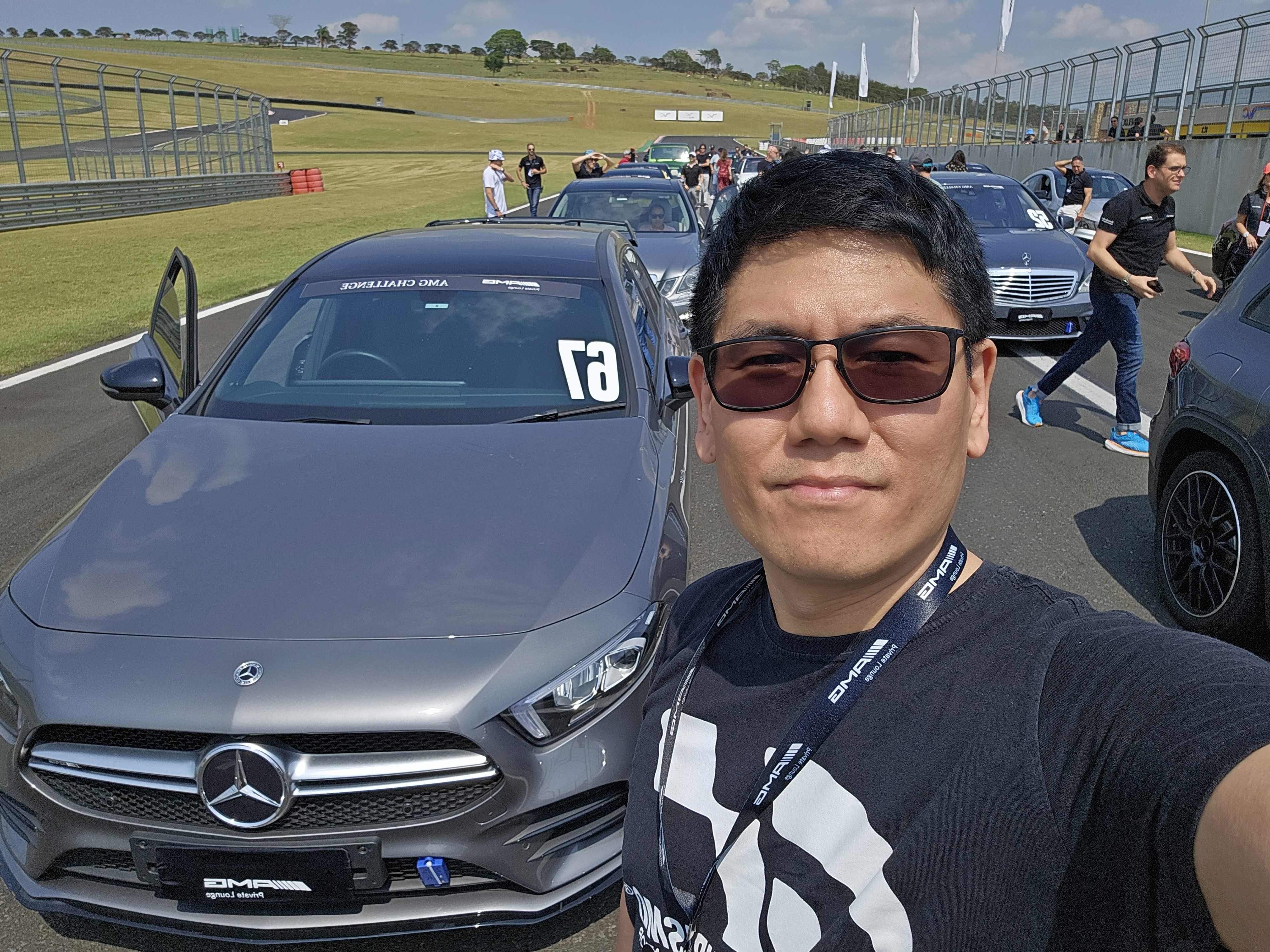
Now that I’m semi-retired, I’ve had the chance to take my Mercedes to track days. I’ve driven at Autódromo de Interlagos (the Autódromo José Carlos Pace), the 4.309 km circuit in São Paulo that’s been hosting the Brazilian F1 GP since 1973, famous for the S do Senna corner complex and the circuit’s wild elevation changes. I’ve also driven at Autódromo Velocitta, a modern 3.443 km circuit opened in 2014 in Mogi Guaçu in the interior of São Paulo, which hosts Stock Car Brasil and Porsche Cup.
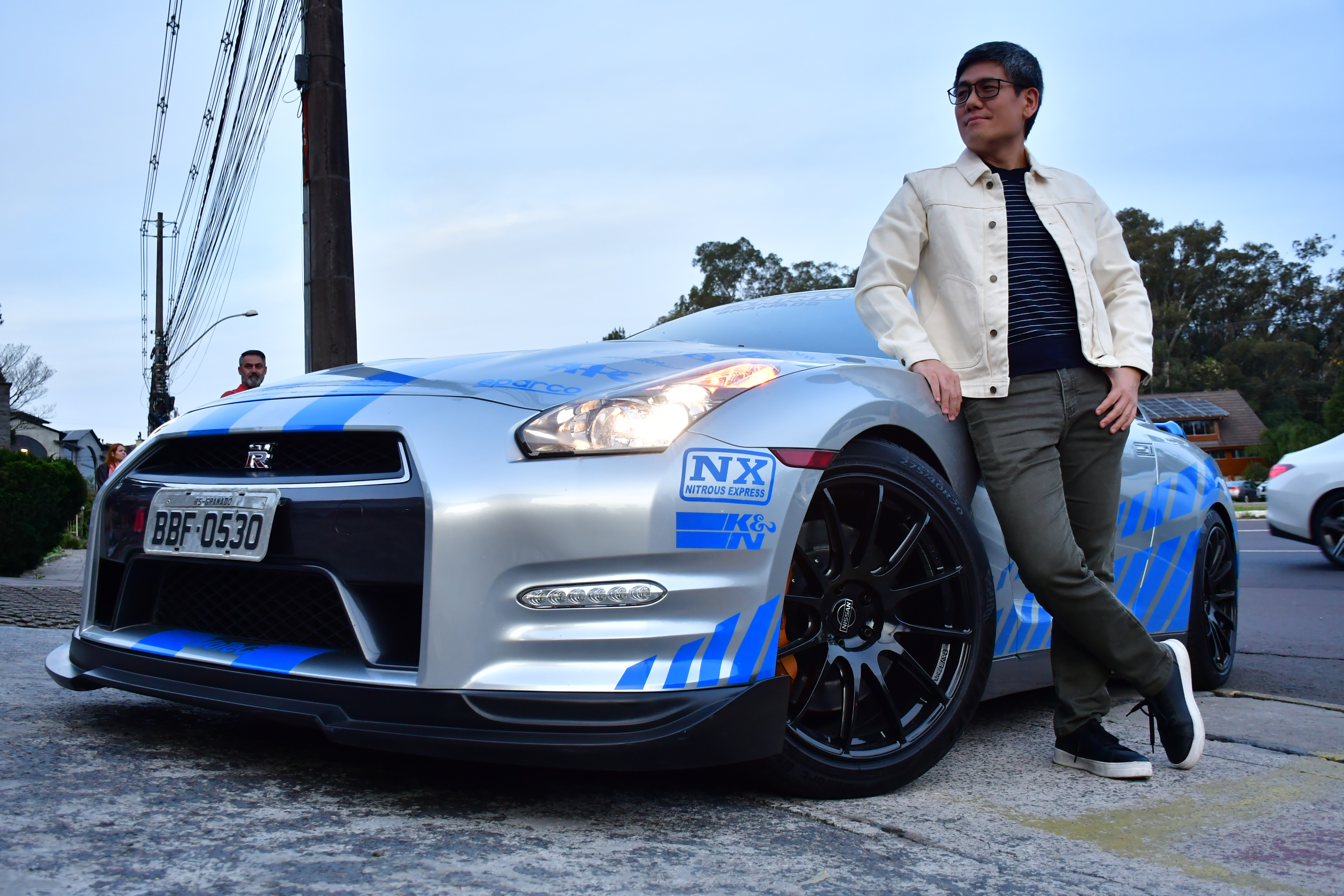
In Las Vegas I’ve driven supercars on those track-day experiences. And when I traveled with my girlfriend to Gramado, in Rio Grande do Sul, we went to Super Carros, which is on Av. das Hortênsias 4635. They have a 2,400 m² hangar with more than 50 cars — Ferraris, Lamborghinis, Porsches, GT-Rs, Corvettes, American muscle cars. You pick a car, head out with an instructor, and drive a roughly 17 km route between Gramado and Canela. I took out a Nissan GT-R and a Ferrari California.
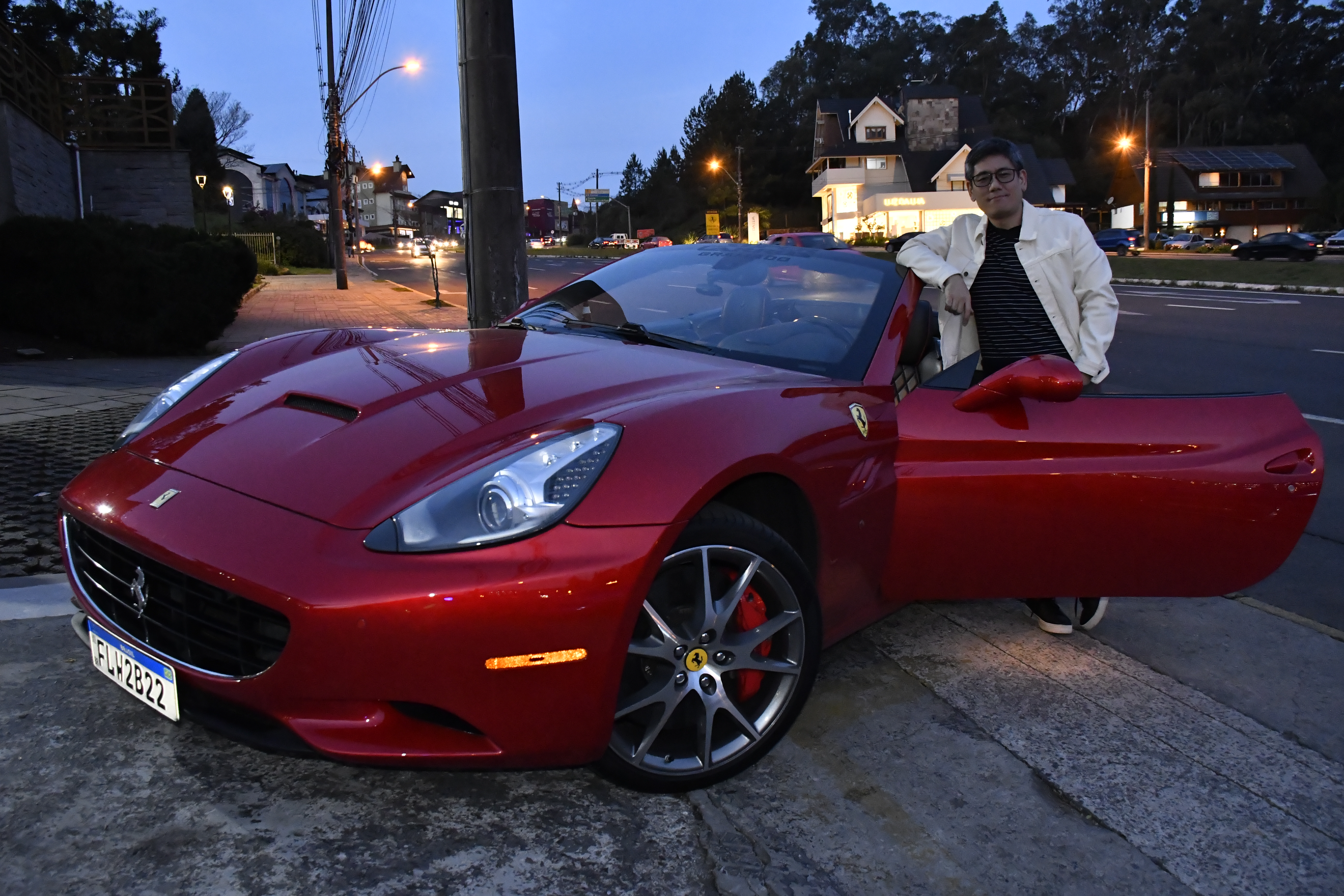
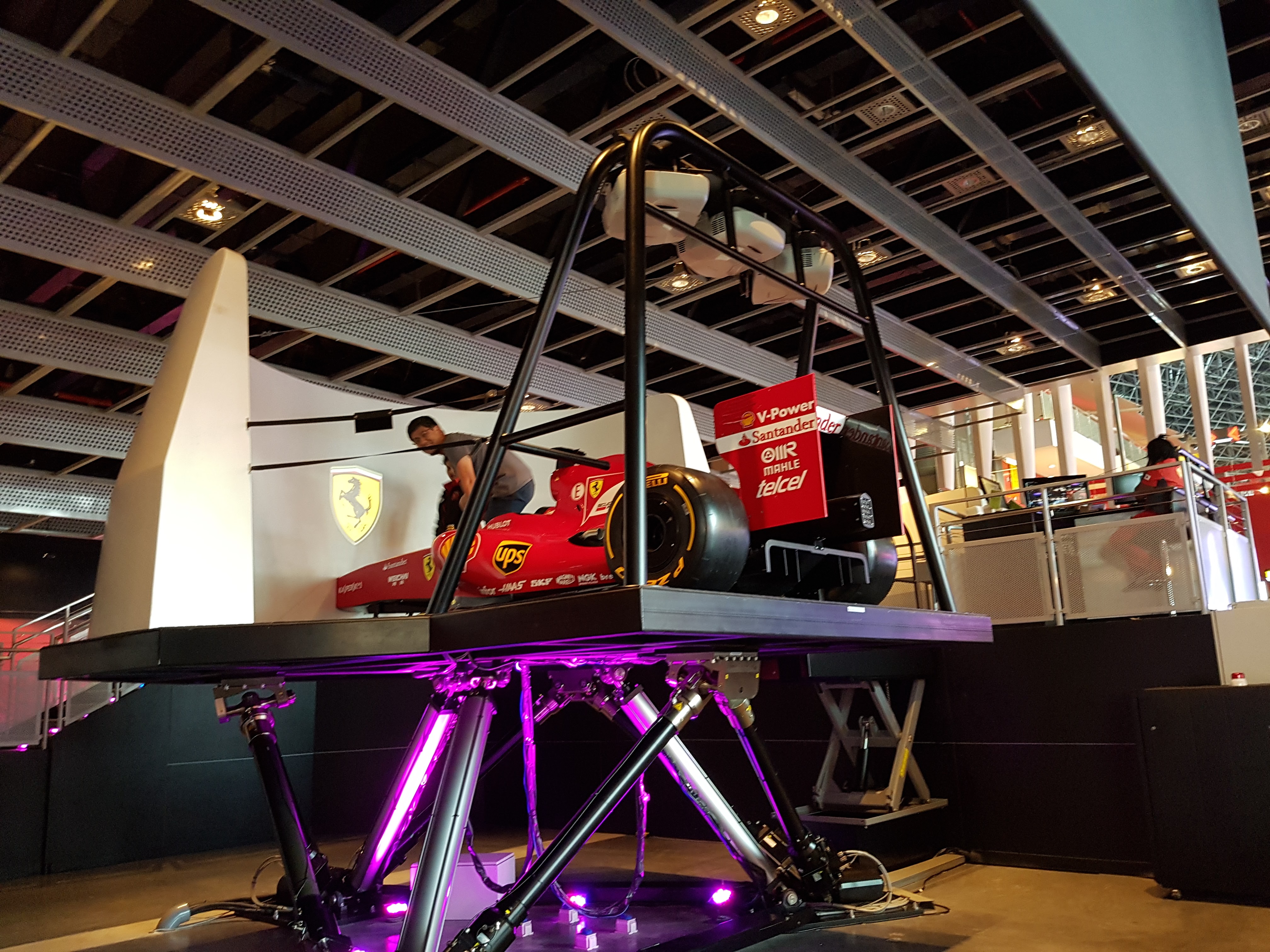
Three years ago I also went to Abu Dhabi with my girlfriend and we went to Ferrari World, which has some of the best racing simulators I’ve ever tried. Hydraulic platform with 6 degrees of freedom, F1 cockpit, the works. I’ve always loved testing simulators wherever I go.
But driving real cars on real tracks is a very expensive hobby. Tires, fuel, insurance, maintenance, registration. And more important: I’m an introvert. I prefer being alone. My simulator cockpit is perfect for when I want to drive without having to deal with anyone. That’s why I love rally so much — it’s me, the virtual co-driver, and the road. Nothing else.
The games I play
I know most people who build a cockpit like this do it to play serious sims — iRacing, Assetto Corsa Competizione, Automobilista 2. I respect that, but it isn’t my thing. I don’t like playing online with other people. I have zero intention of starting a live streaming career. This is purely for my own enjoyment.
These days I play Gran Turismo 7 on the PS5, Forza Motorsport (the 8, from 2023) on PC, but where I have the most fun is in rally games: EA SPORTS WRC, WRC 10 and DiRT Rally 2.0. My first experience with Forza was on the Xbox One with Forza Motorsport 5 and then Forza Horizon 4, which kept me hooked for hundreds of hours.
And I have a huge soft spot for retro games. The original Colin McRae Rally from 1998 on the PS1 was my first rally game. But my favorite of all time is Colin McRae Rally 2.0 (2000), also on the PS1. I recently played through the entire campaign again on the PC version — you can find repacks that run in high resolution and widescreen, much better than the original PlayStation versions. I’d recommend that for any of the titles in the series.
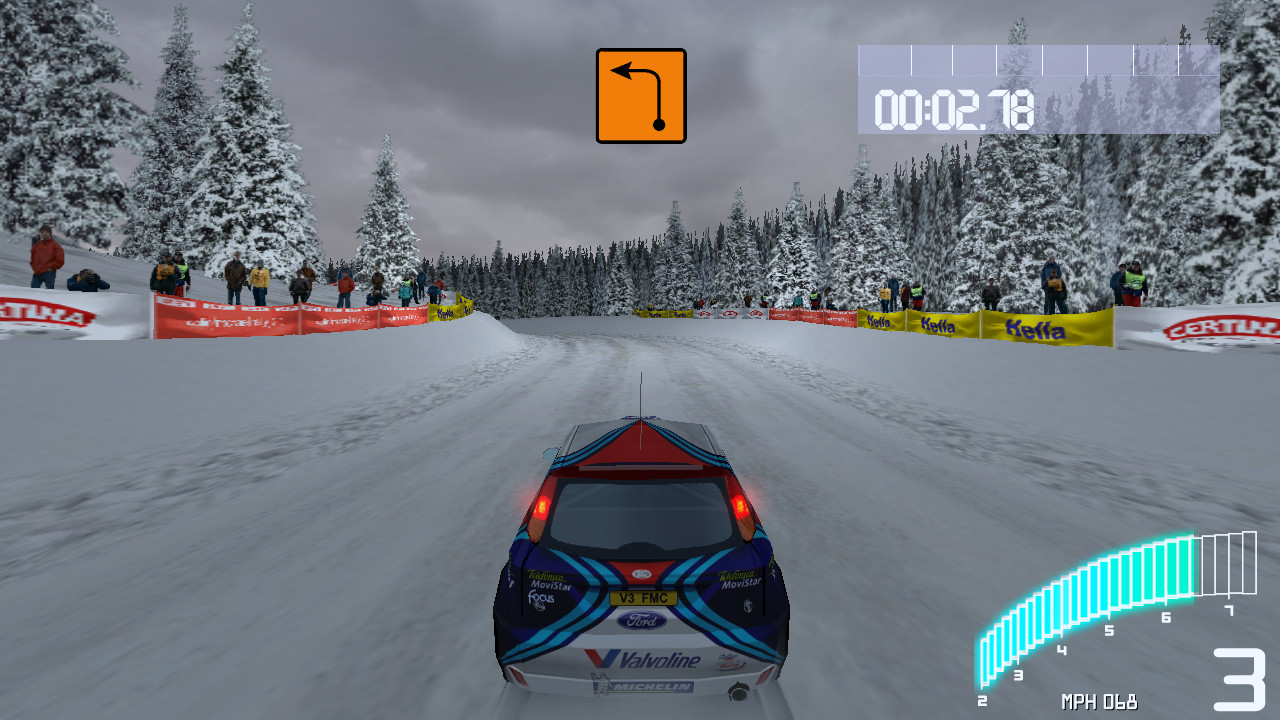
After that came Colin McRae 3 (2002), Colin McRae Rally 04 (2003) and Colin McRae 2005 (2004). Other arcades I revisit often: OutRun 2 SP (2004) and OutRun 2006: Coast 2 Coast (2006) — the best OutRun ever made, in my opinion.
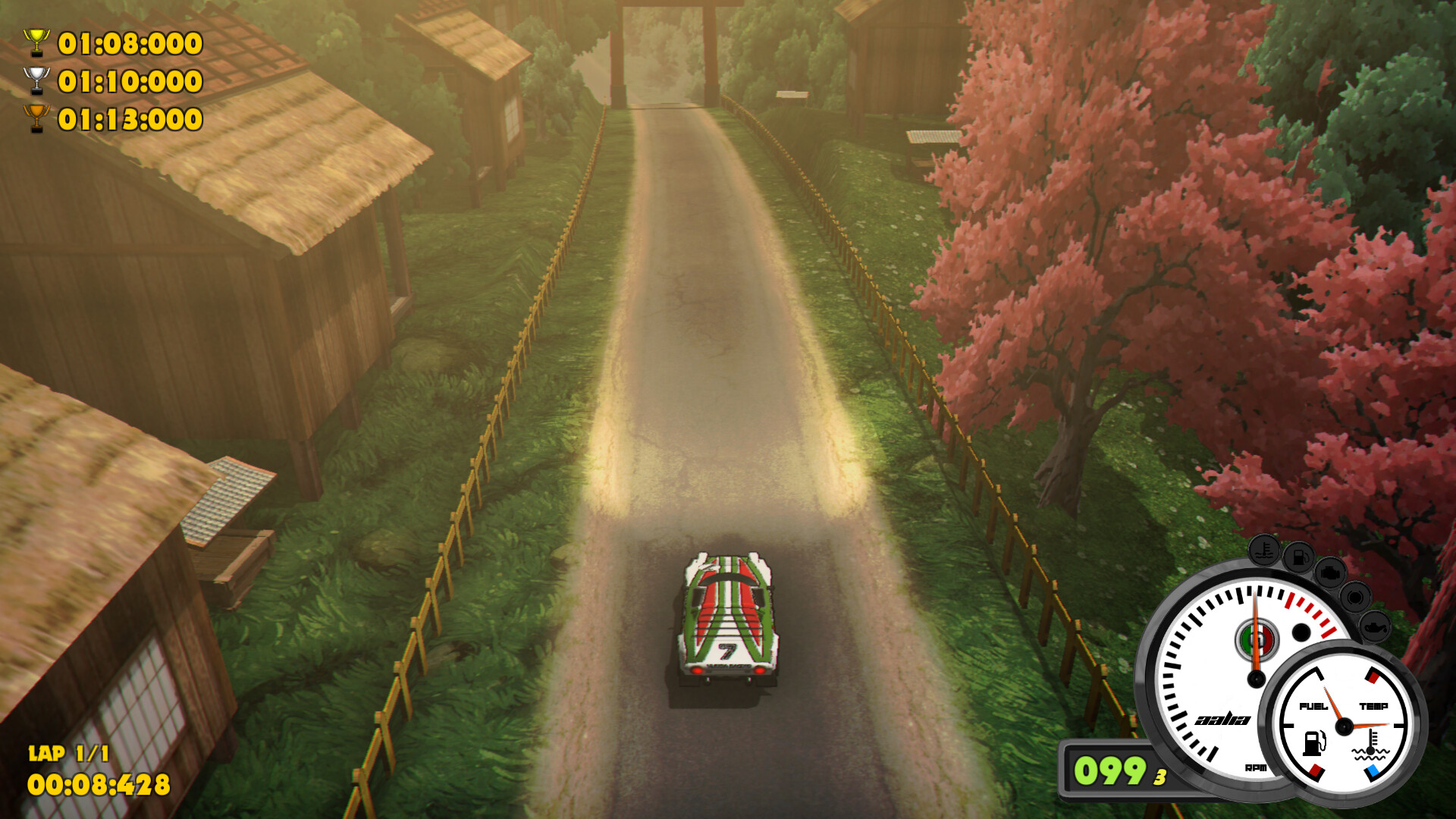
But my game of the year, by a long shot, is Super Woden: Rally Edge. An indie made by a solo developer (ViJuDa, from Spain) that launched in January 2026 for less than R$ 60. Eight countries, more than 80 cars, a career mode, local split-screen multiplayer for up to 4 players, online leaderboards. The behind-the-car camera instead of the top-down view of the previous Super Woden GP made all the difference. 96% positive reviews on Steam with more than 1,300 ratings. It’s the kind of game that proves you don’t need a million-dollar budget to make something amazing.
The evolution of my wheel setup
Logitech G29 era (~2015-2021)
I always wanted a racing wheel. I started over 15 years ago with something equivalent to Logitech’s entry-level wheel, a G29. The G29 is a fine wheel to start with — gear-driven force feedback, pedals with a clutch, 900 degrees of rotation. But its force feedback is noisy and a bit crude. You can feel the gears turning.
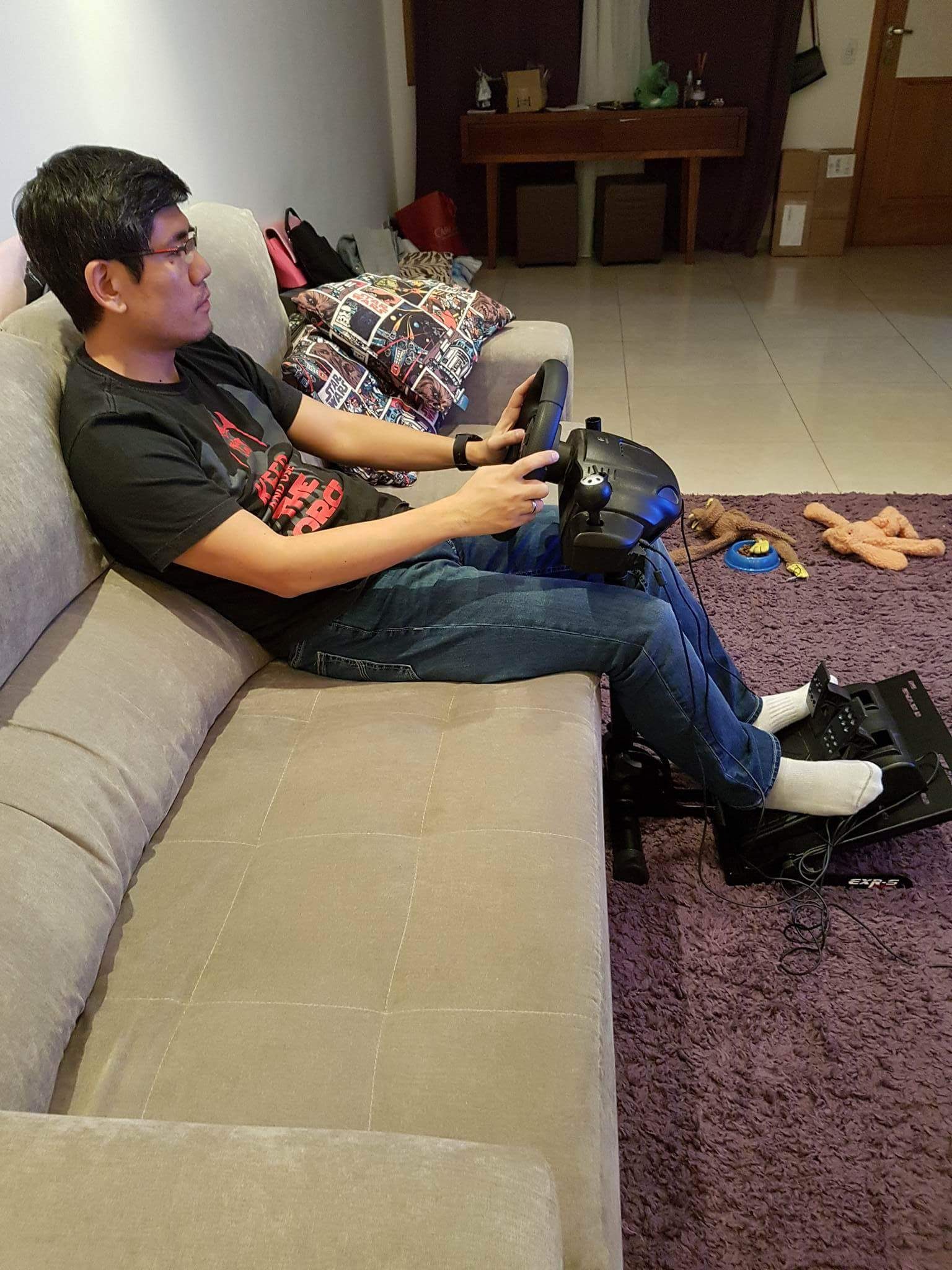
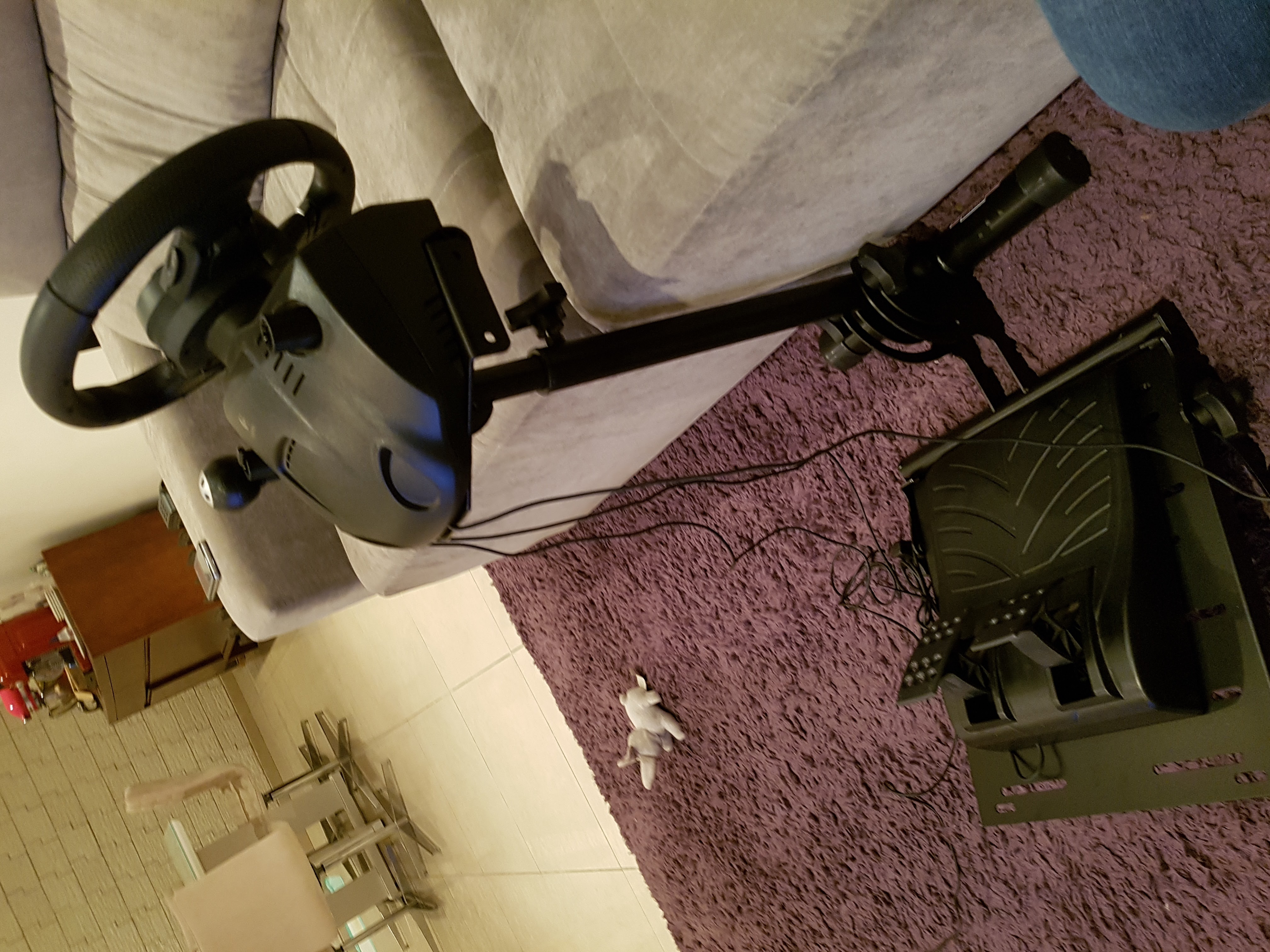
Thrustmaster T300RS + SXT V2 stand era (~2021-2024)
Around 2021 I upgraded to the Thrustmaster T300RS, a belt-driven wheel that’s a huge jump up from the Logitech. The force feedback is much smoother and more precise. And I bought the Extreme Sim Racing SXT V2 stand, which is much sturdier than those generic desk clamps.
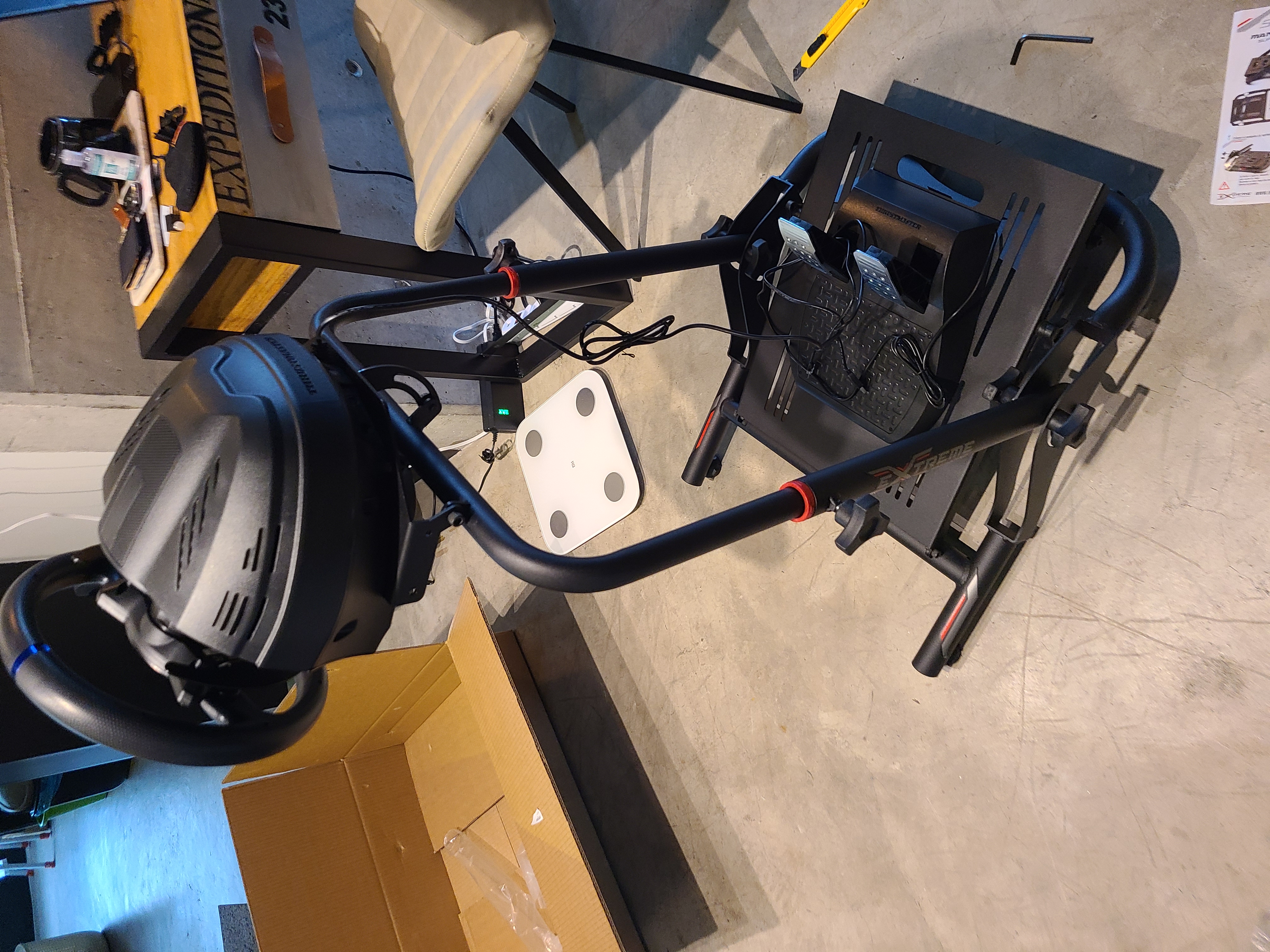
First I set it up in front of my desktop PC, which at the time had an RTX 3090. It worked, but it was a hassle to keep mounting and unmounting the stand and the cables every time I wanted to play.
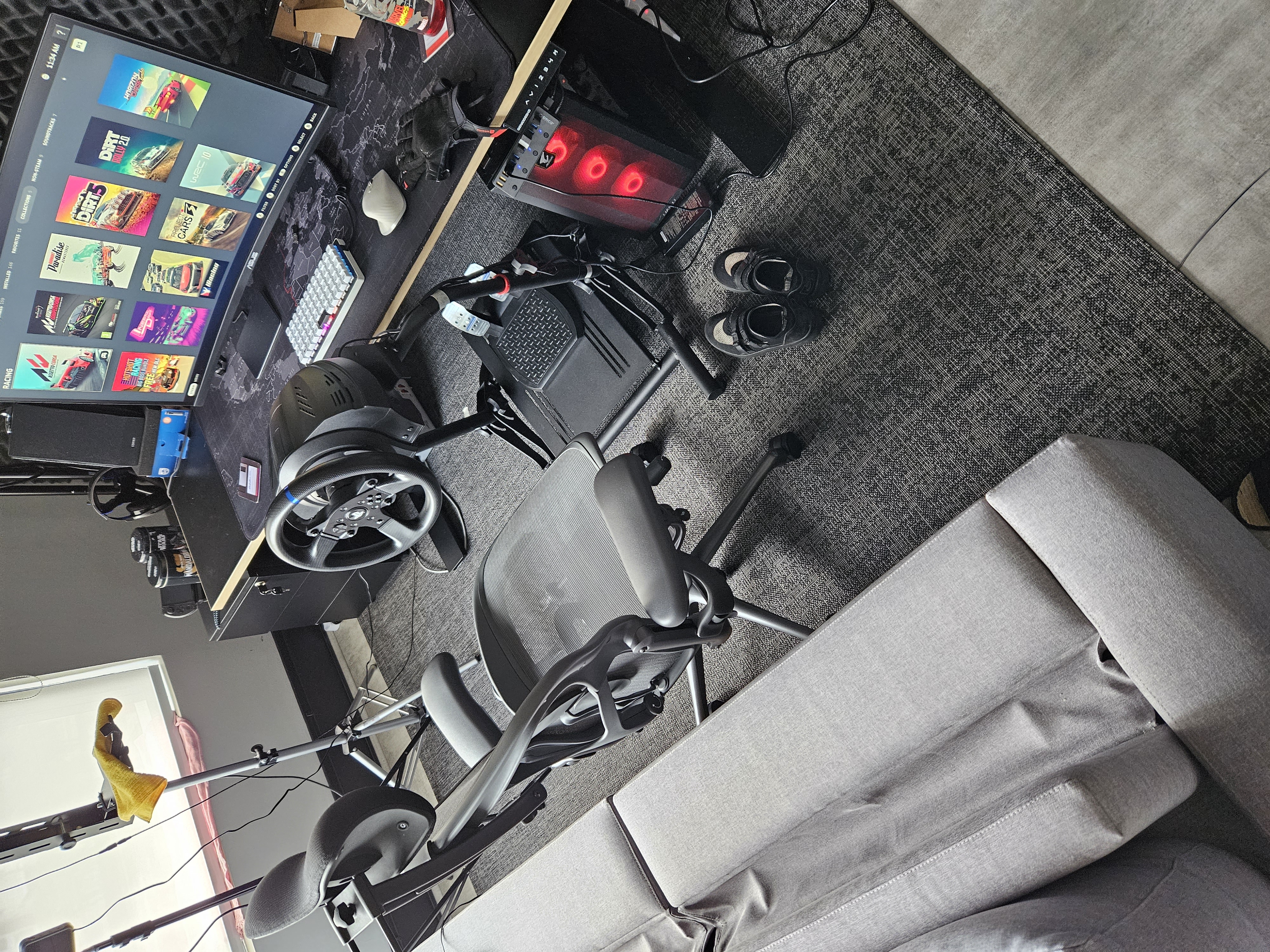
Then I built a setup with a long fiber-optic HDMI cable to connect my 60" TV to the PC at the back of the room. I moved the stand in front of the couch. Less of a hassle, but I still had to take it down whenever I wanted to watch a movie with my girlfriend.
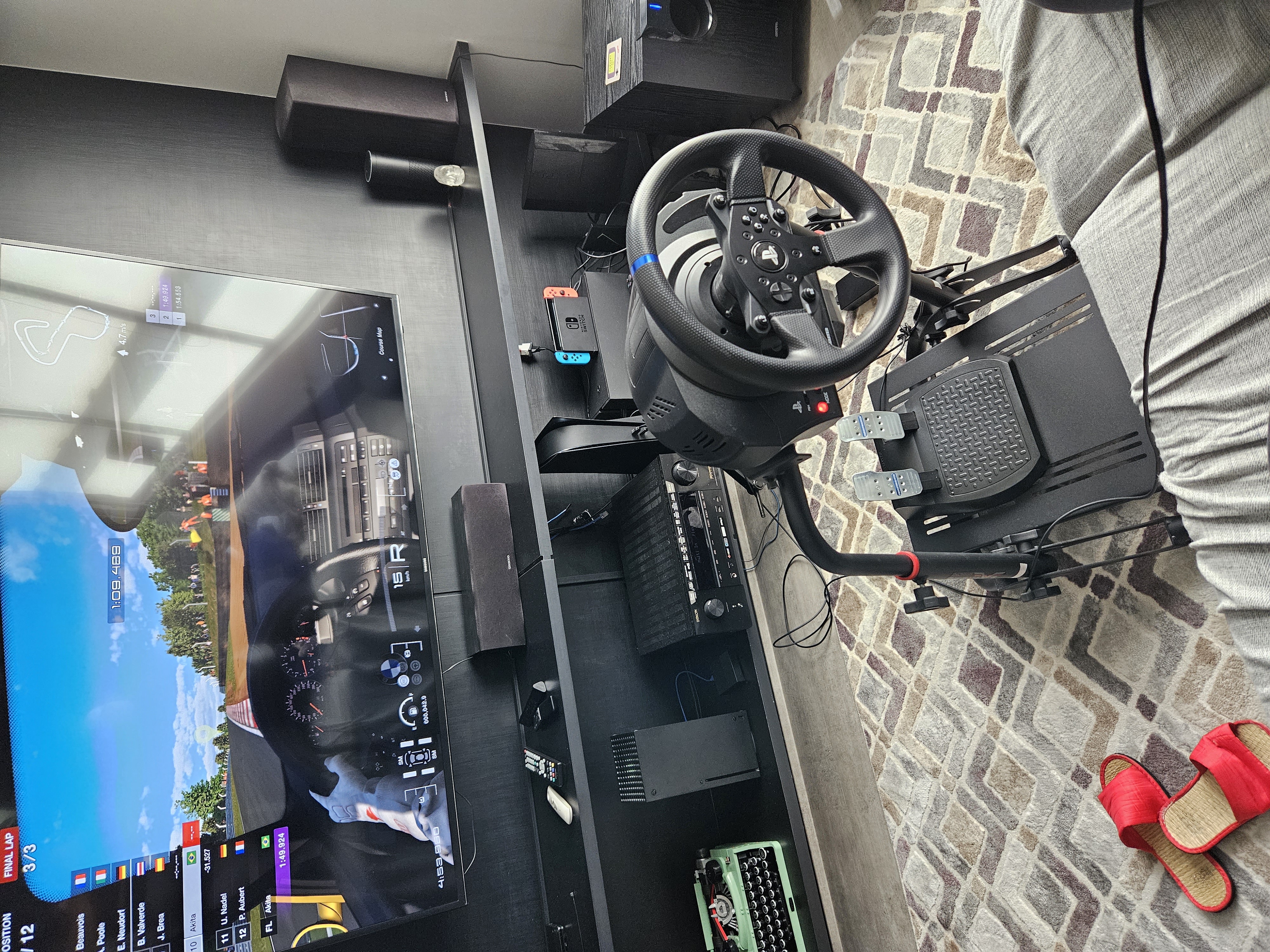
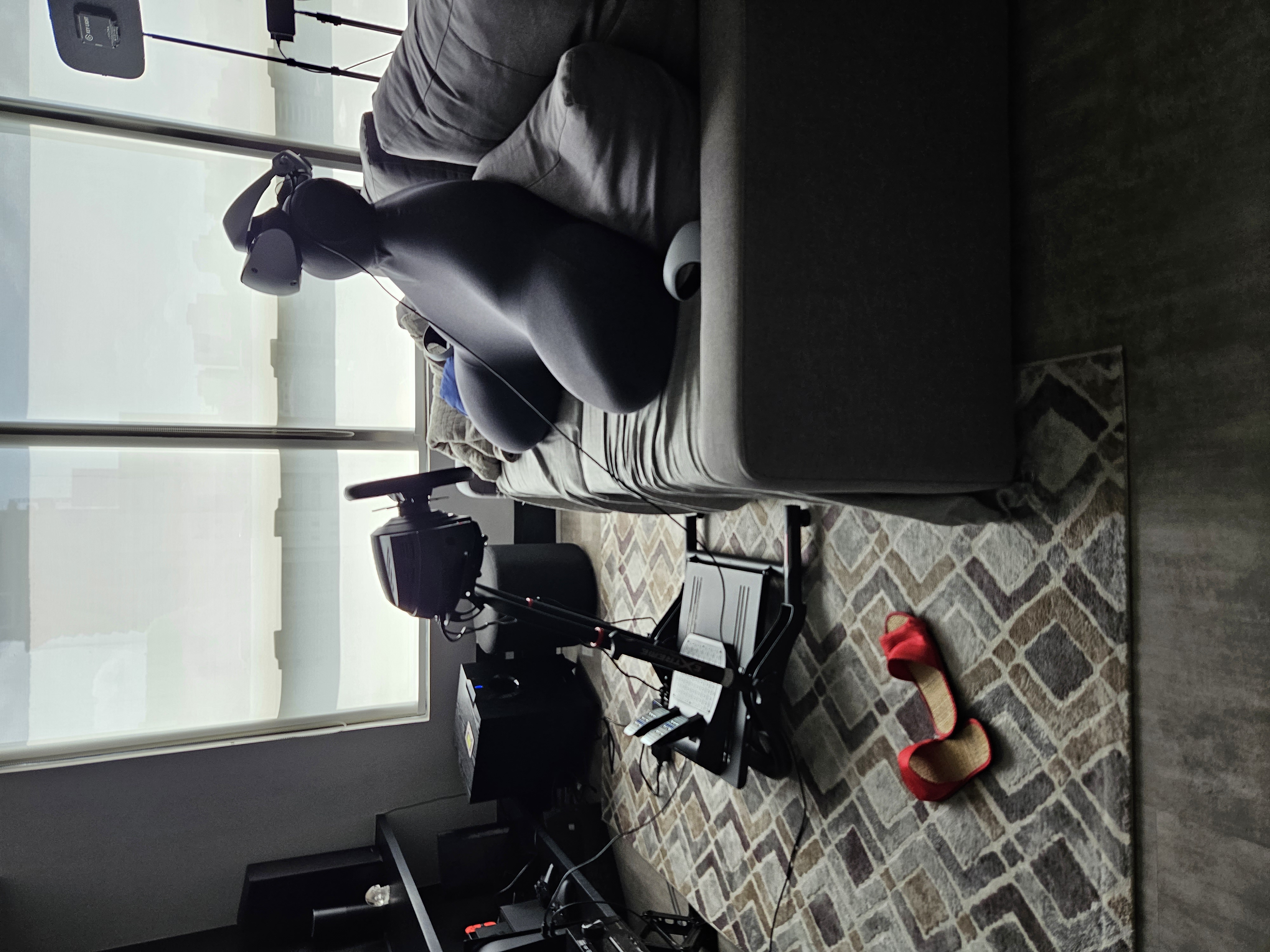
Around 2024 or 2025 I swapped my couch for one of those VIP cinema couches from Star Seat, which reclines and the whole nine yards. The problem: it was way taller than the previous couch. I had to do all kinds of workarounds to make the stand work at that height. I even 3D-printed mounts and sent them to PCBWay to machine steel plates so I could attach big wheels under the stand and gain a few centimeters of height. But that left the setup way too wobbly to drive comfortably.
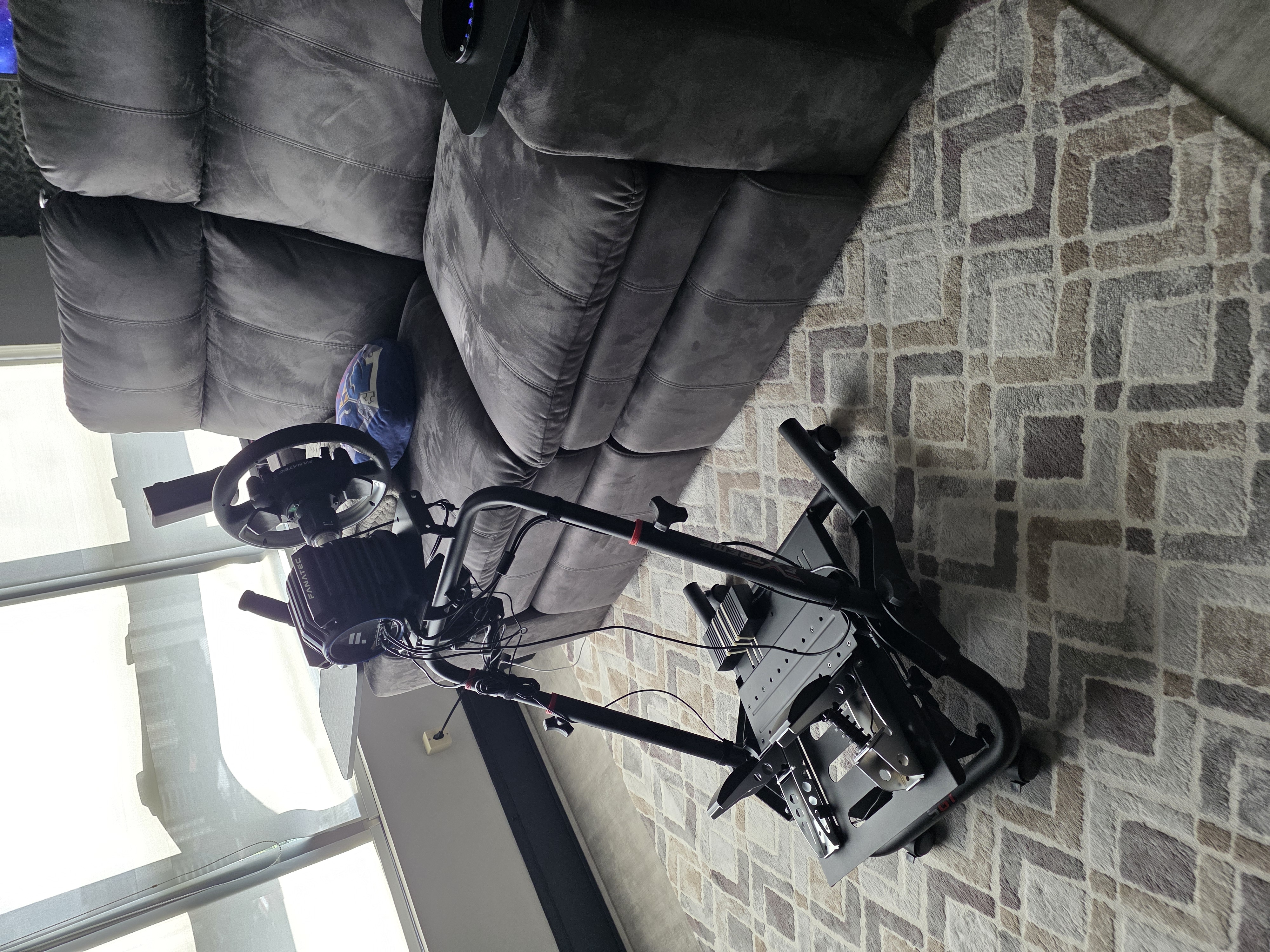
Fanatec CSL DD + Direct Drive era (~2024-2025)
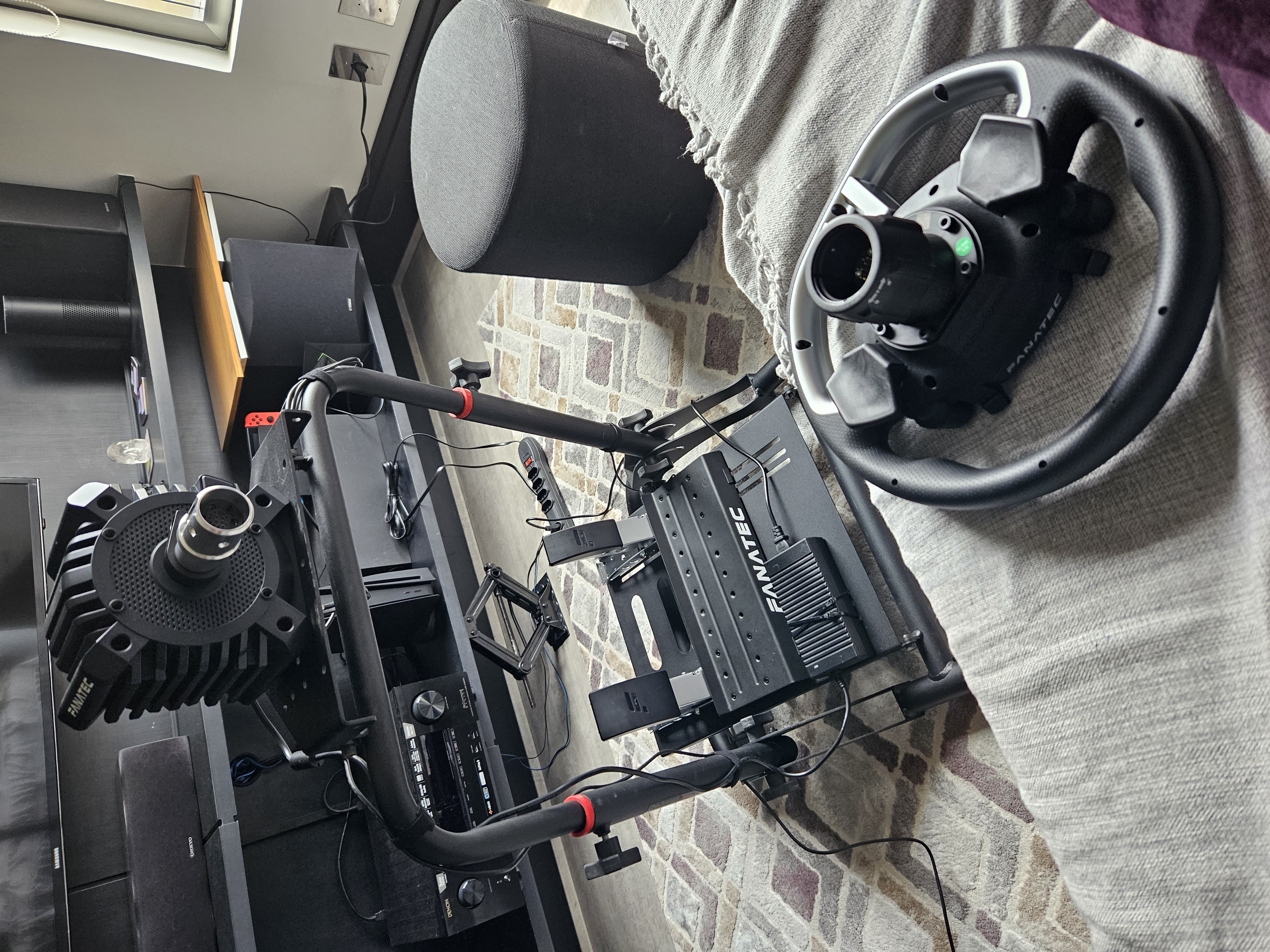
In the meantime I gave the T300 to my brother and upgraded to a Fanatec CSL DD Gran Turismo Edition. The CSL DD’s direct drive motor delivers 5 Nm of torque at the base, but the Gran Turismo DD Pro kit comes with the Boost Kit 180 that brings it up to a sustained 8 Nm with no active cooling. Direct drive means there’s no gear or belt between the motor and the wheel — the motor’s shaft IS the wheel’s shaft. The difference is absurd. The T300 was already great, much better than the Logitech. But the Fanatec is on another level. You feel every asphalt texture, every bump, every incipient slide. There’s no going back once you try it.
I bought it together with the CSL Pedals with Load Cell kit, which measures pressure on the brake instead of displacement. Makes all the difference in braking — you learn to modulate by foot pressure, not by how far the pedal moves. Way more natural.
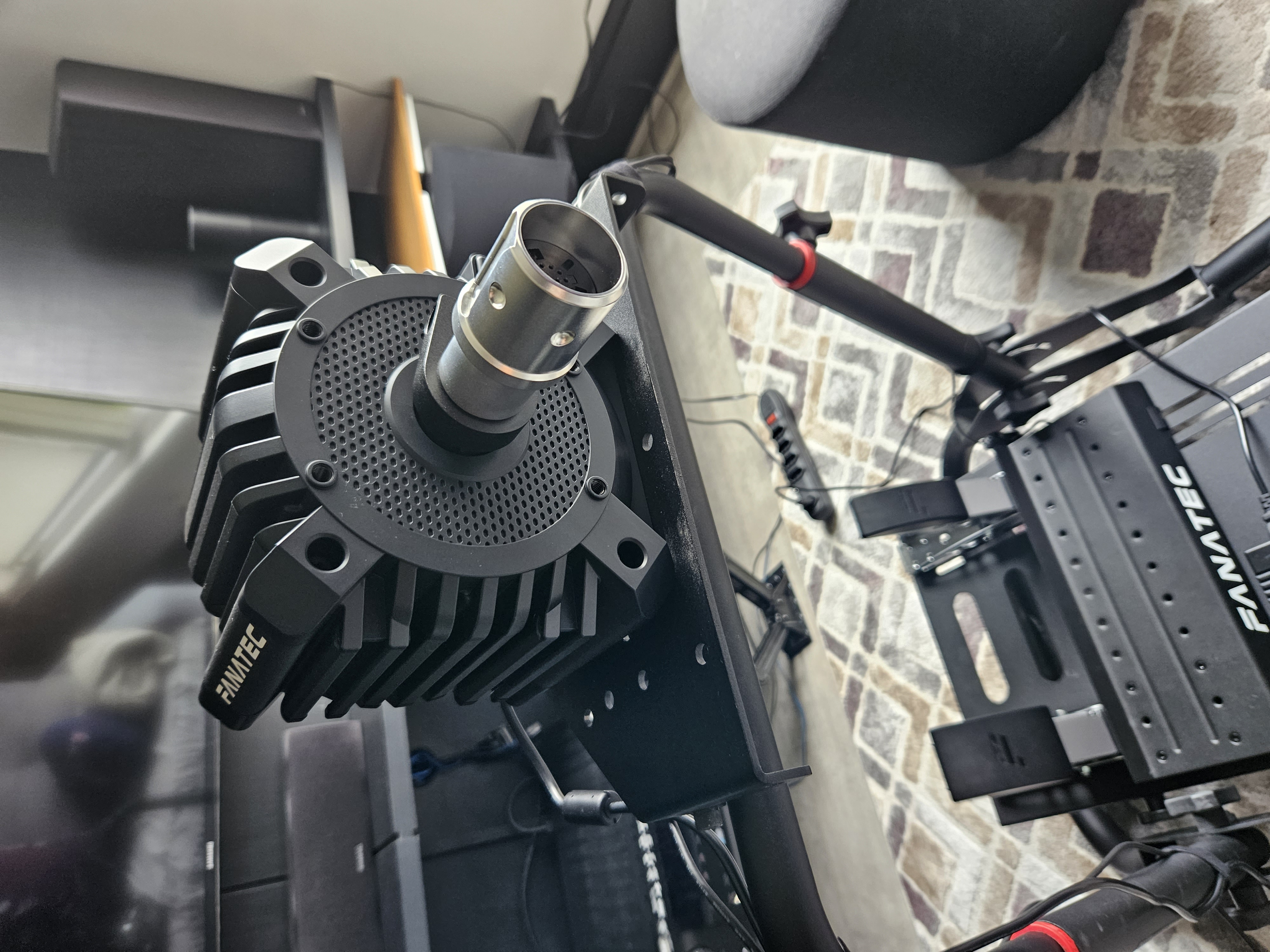
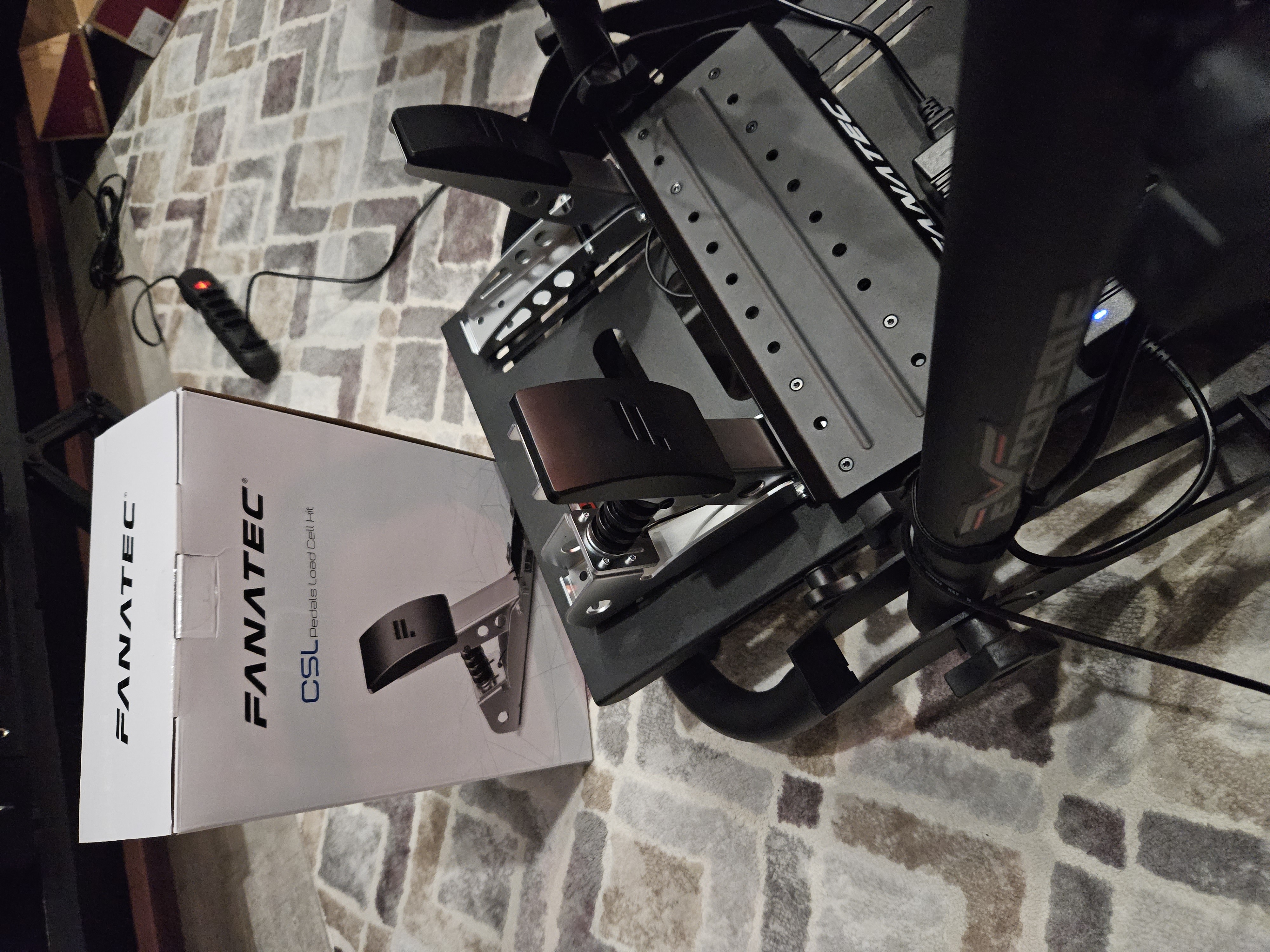
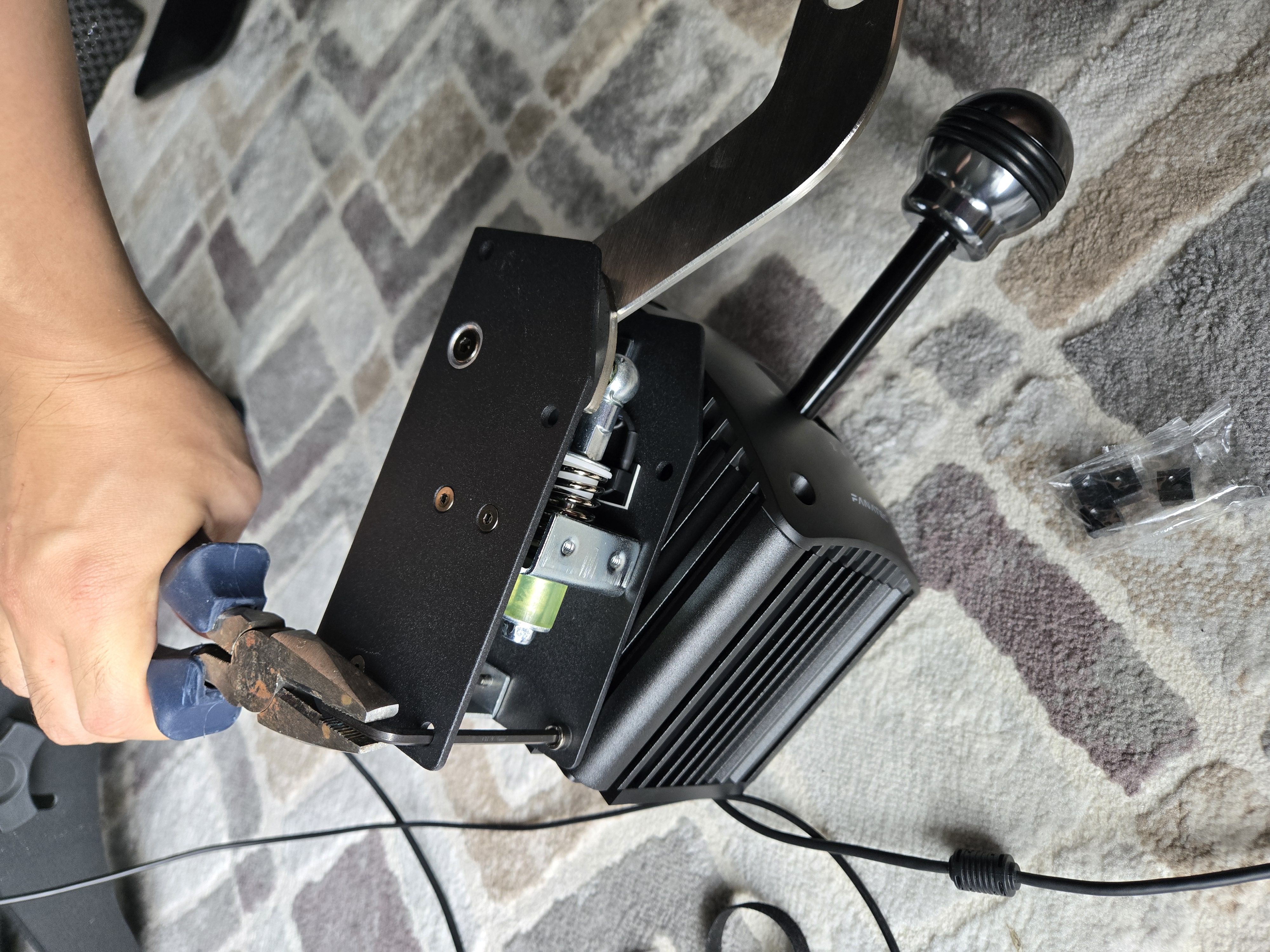
I also wanted to try the H-pattern manual shifter with the ClubSport Shifter SQ V1.5 from Fanatec and a separate handbrake. It’s fun to try out old cars with a clutch and an H-pattern, but in practice I never adapted. The SXT V2 stand was already shaking a lot with the direct drive, and using the shifter on that unstable setup was frustrating. And I know there are people who want to do heel-toe, but in the simulator I prefer to keep my left foot on the brake and my right on the gas and modulate both at the same time. Works better for me. Now that I have the McLaren wheel with the analog handbrake and clutch paddles right on the wheel, the H-pattern shifter and the external handbrake have been retired. For rally, an analog handbrake on the wheel is much more natural.
I also bought the PS5 with Gran Turismo 7 around this time. I put on the dbrand Darkplates matte black faceplates to replace the original white plates — it looks much better and more discreet.
But the setup was still the SXT V2 stand in front of the VIP couch. The same kludge. The same wobble. I obviously wasn’t going to give up the cinema couch. The situation became unsustainable.
The computer and the hardware setup
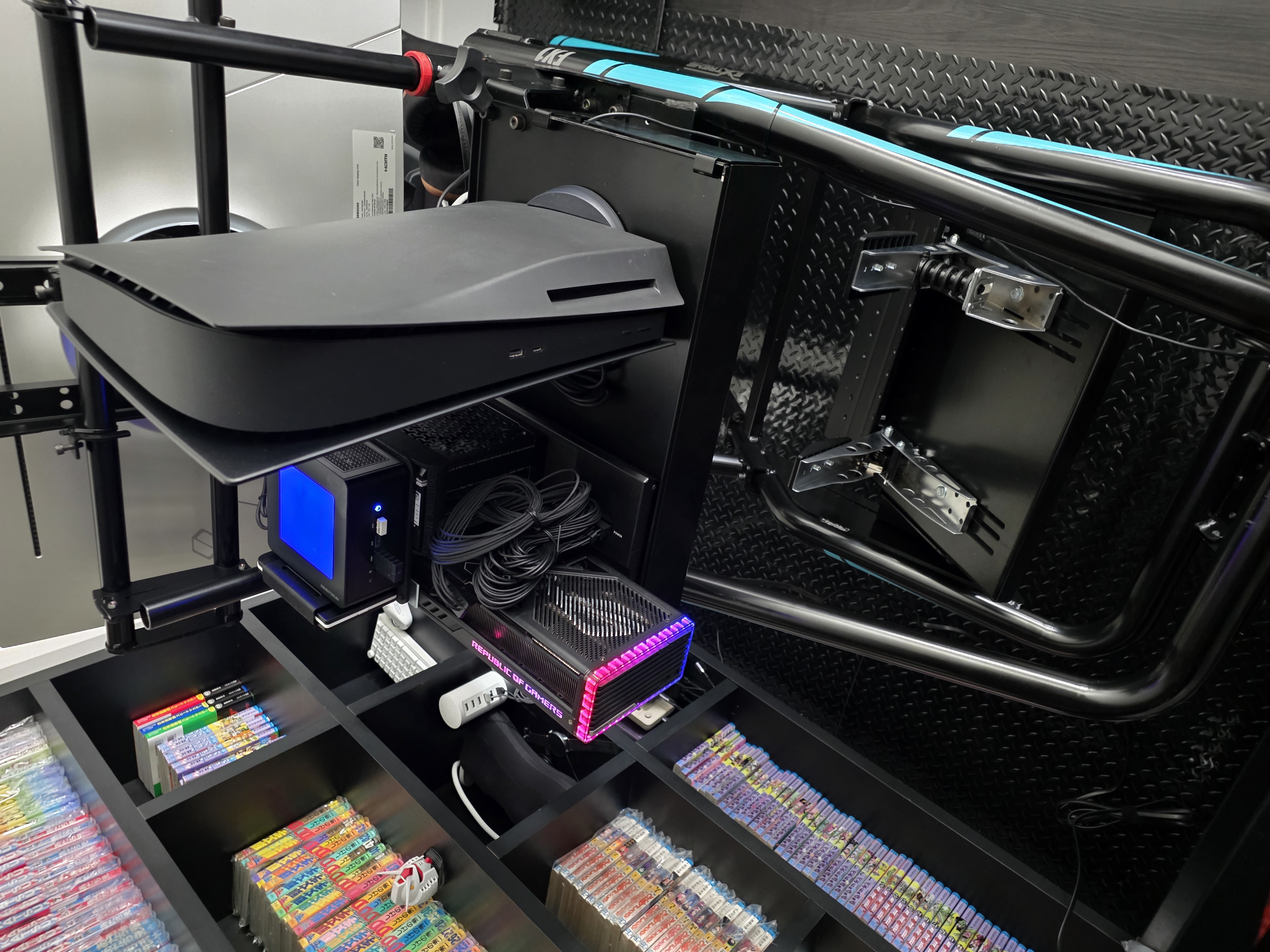
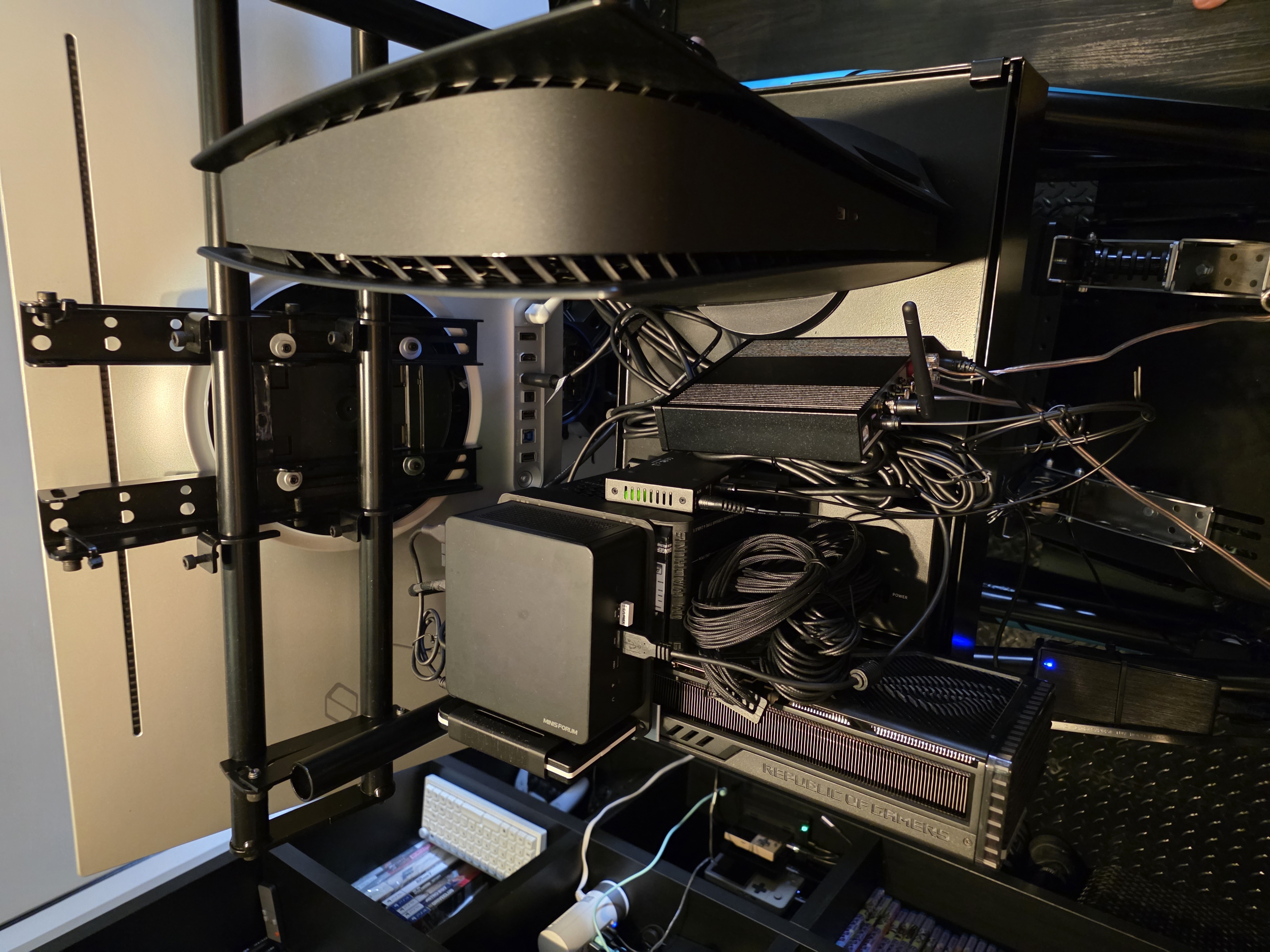
A note on my gaming hardware. I bought a Minisforum UX790 Pro to be my dedicated Steam machine. It’s a mini-PC with an Intel Core Ultra 9 285H processor, fits in the palm of your hand. Together I bought the Minisforum DEG1, an external GPU dock that connects via OCuLink (PCIe 4.0 x4, 64 GT/s). It’s an open design — basically a board with a PCIe x16 slot and room for an ATX or SFX power supply. There’s no card size limit, so an RTX 4090 fits comfortably. The performance loss compared to a native PCIe slot is minimal. I put the RTX 4090 in it. The 4090 came from my desktop — at the start of 2025 I went to Miami and took the chance to buy an RTX 5090 because I was using more and more local AI and LLMs. I gave my old 3090 to my girlfriend to use for video editing. The 4090 went into the mini-PC.
So my gaming setup today is: Minisforum UX790 Pro + eGPU with RTX 4090 for Steam and PC games, and a PlayStation 5 with matte black Darkplates for Gran Turismo 7 and exclusives.
The cockpit: Formula FX1
To round out the setup I also needed a decent monitor. I was already used to my 80" Samsung OLED TV in the living room and didn’t want to downgrade picture quality. So I invested in the Samsung Odyssey OLED G8 32". It’s a 4K (3840x2160) OLED monitor with a 240 Hz refresh rate, 0.03 ms response time (GTG), HDR True Black 400, HDR10+, 99% DCI-P3 coverage, 1,000,000:1 contrast, and FreeSync Premium Pro. It has 2 HDMI 2.1 inputs and 1 DisplayPort 1.4.
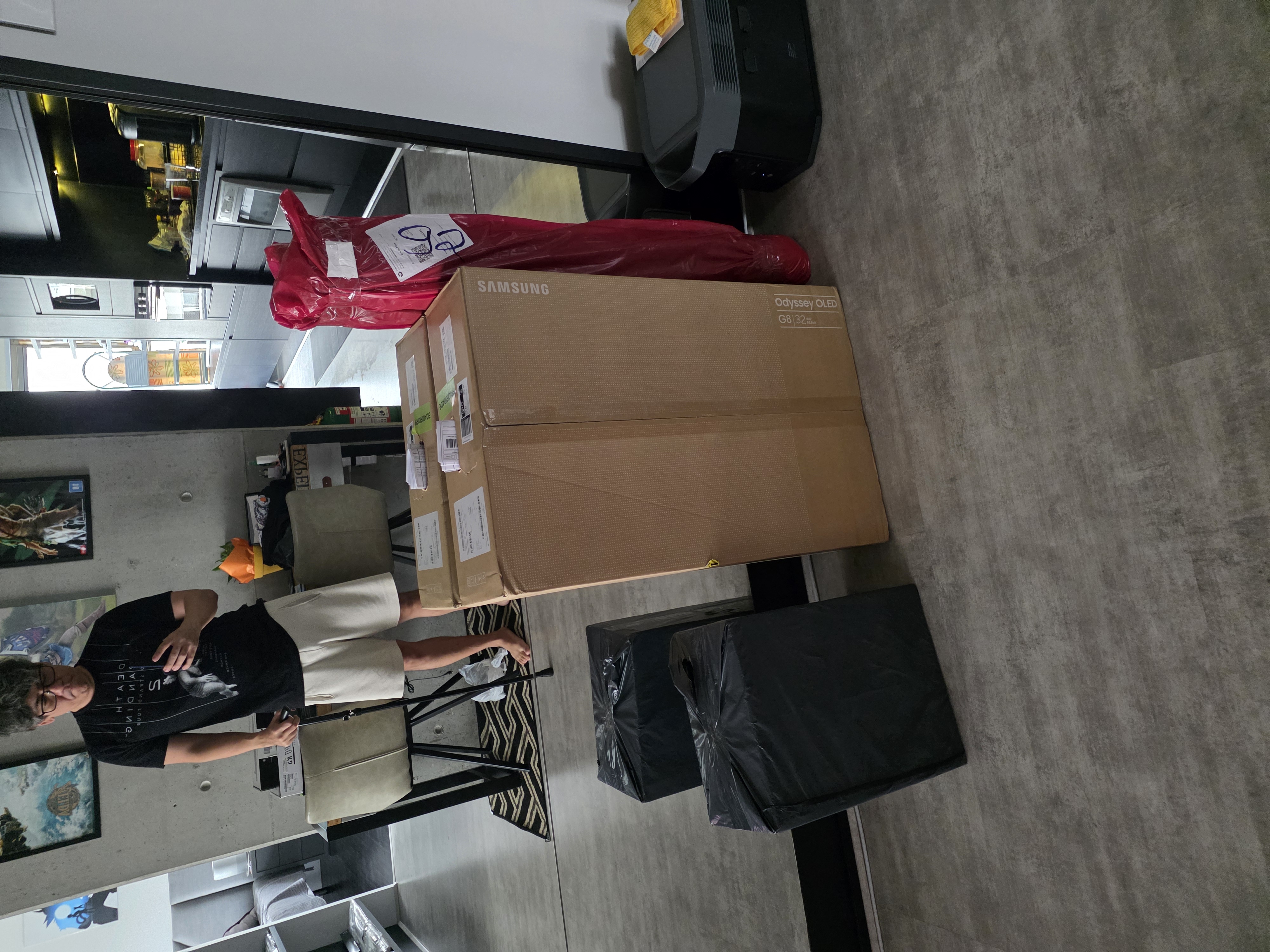
In practice: the colors pop, black is real black (it’s OLED, no backlight), and with the RTX 4090 I run most games at 4K and 120 fps with no problem. On lighter titles like Super Woden: Rally Edge, it easily hits 240 Hz. The smoothness is absurd. For a cockpit where you’re 60-70 cm from the screen, 32" OLED in 4K is the sweet spot. Bigger and you start to see pixels. Smaller and you lose the immersion.
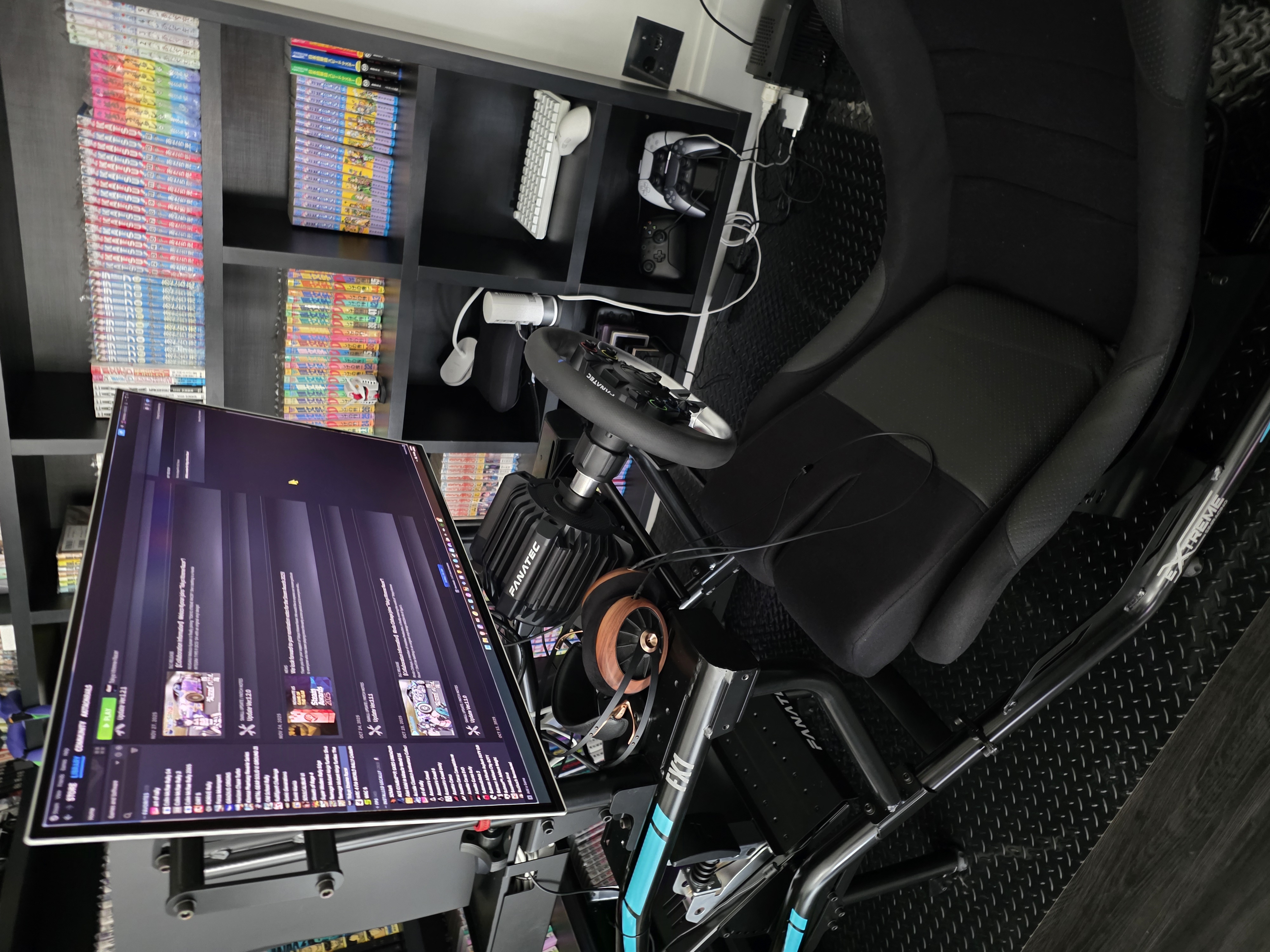
In January 2026, after years of kludges, I finally ordered a dedicated cockpit. I researched a lot. I considered the Cockpit AX160, made of aluminum profile and very modular, and the Cockpit 4.0, which is the more traditional tubular steel kind. But neither was available at the time of purchase. And then I found the Formula FX1 in black and green from Extreme Racing — Petronas colors, F1-styled.
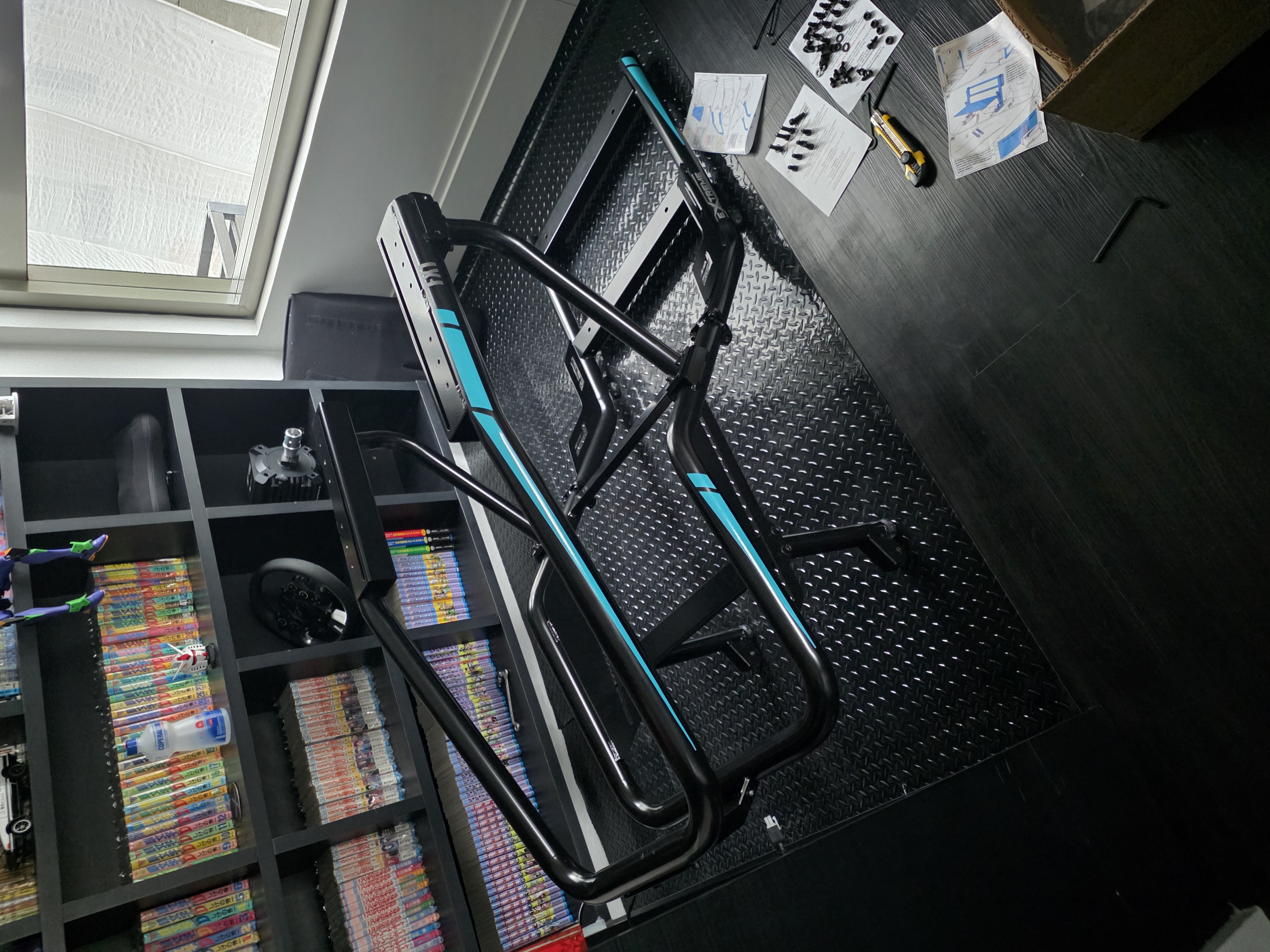
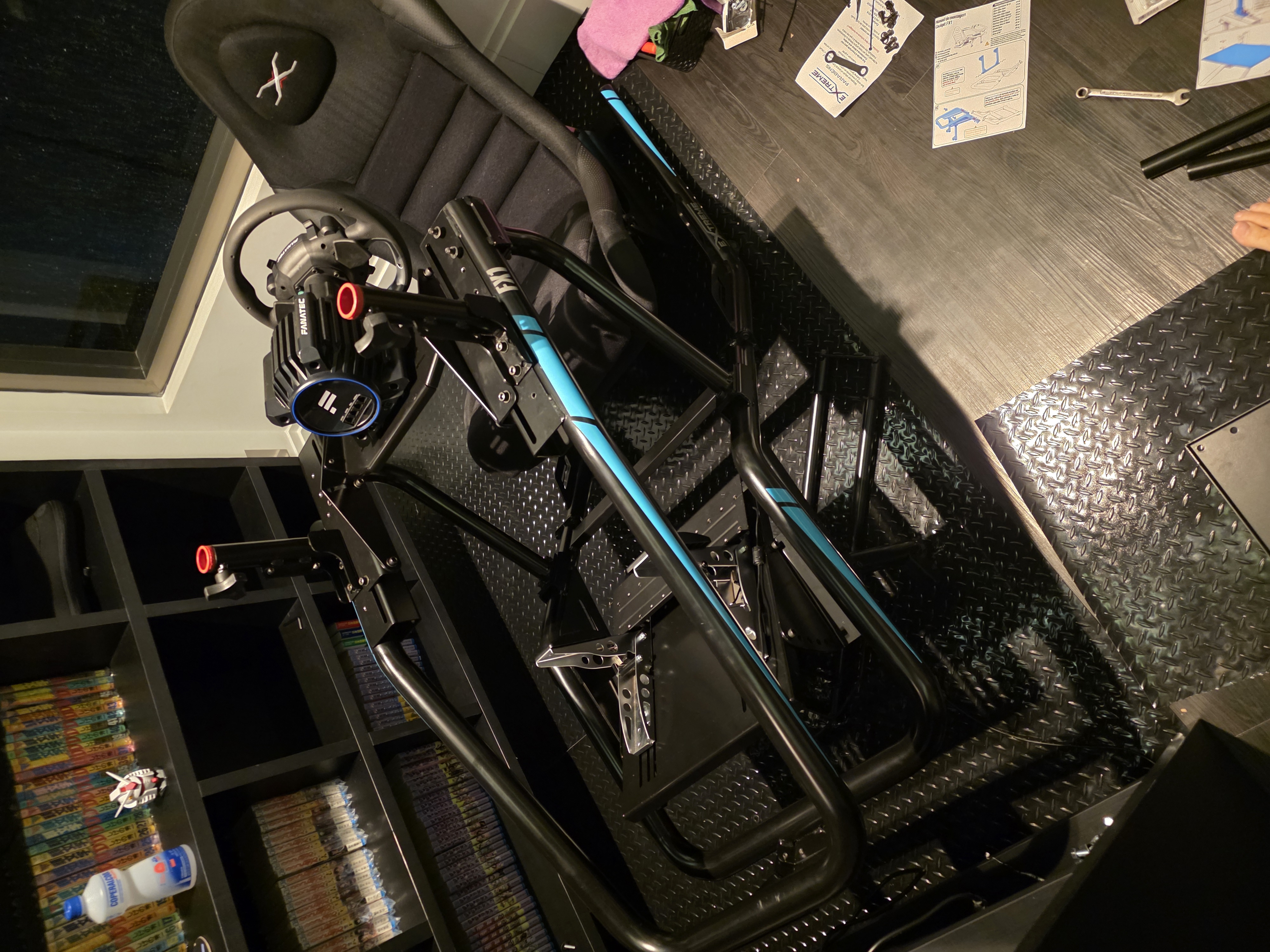
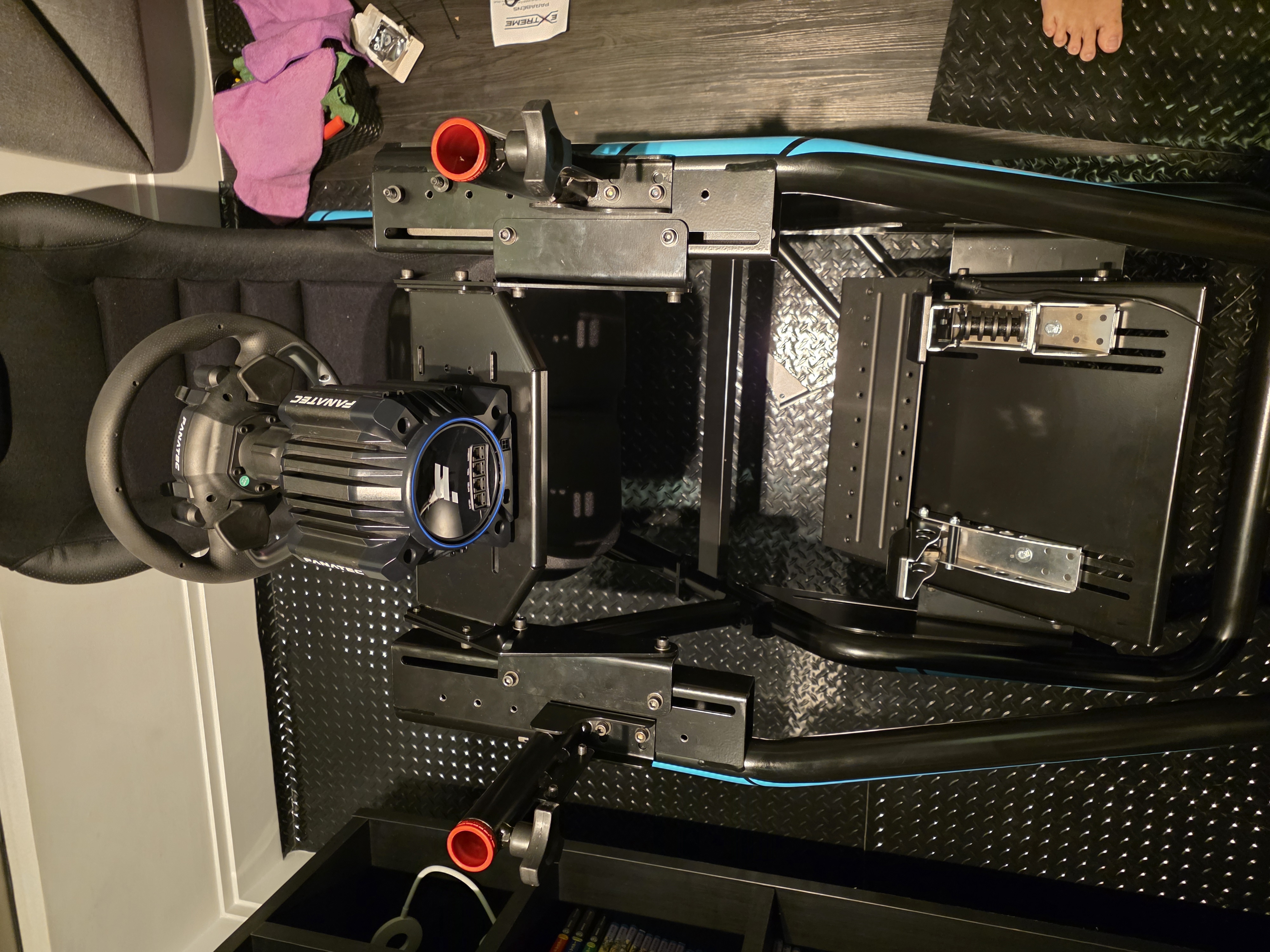
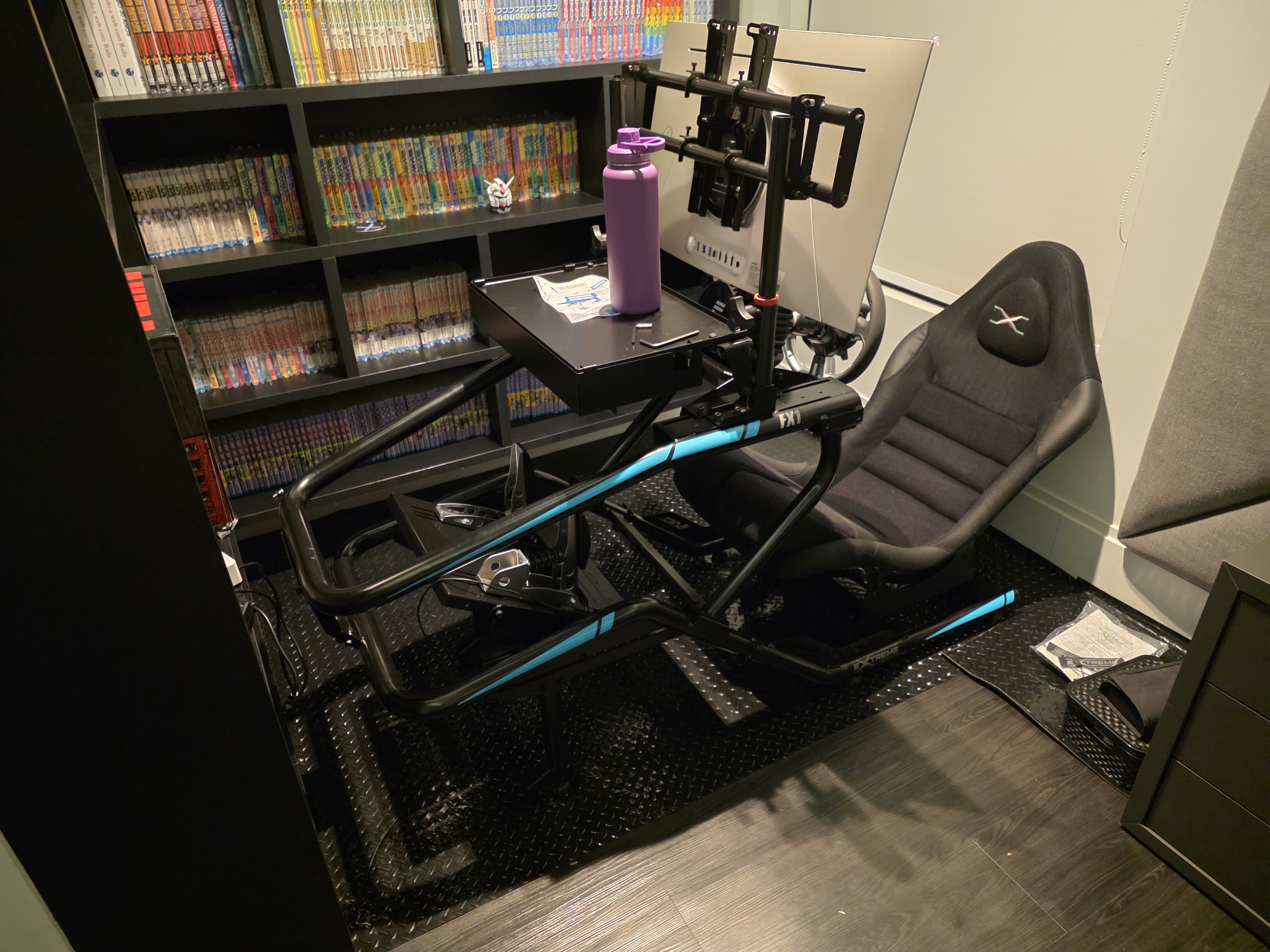
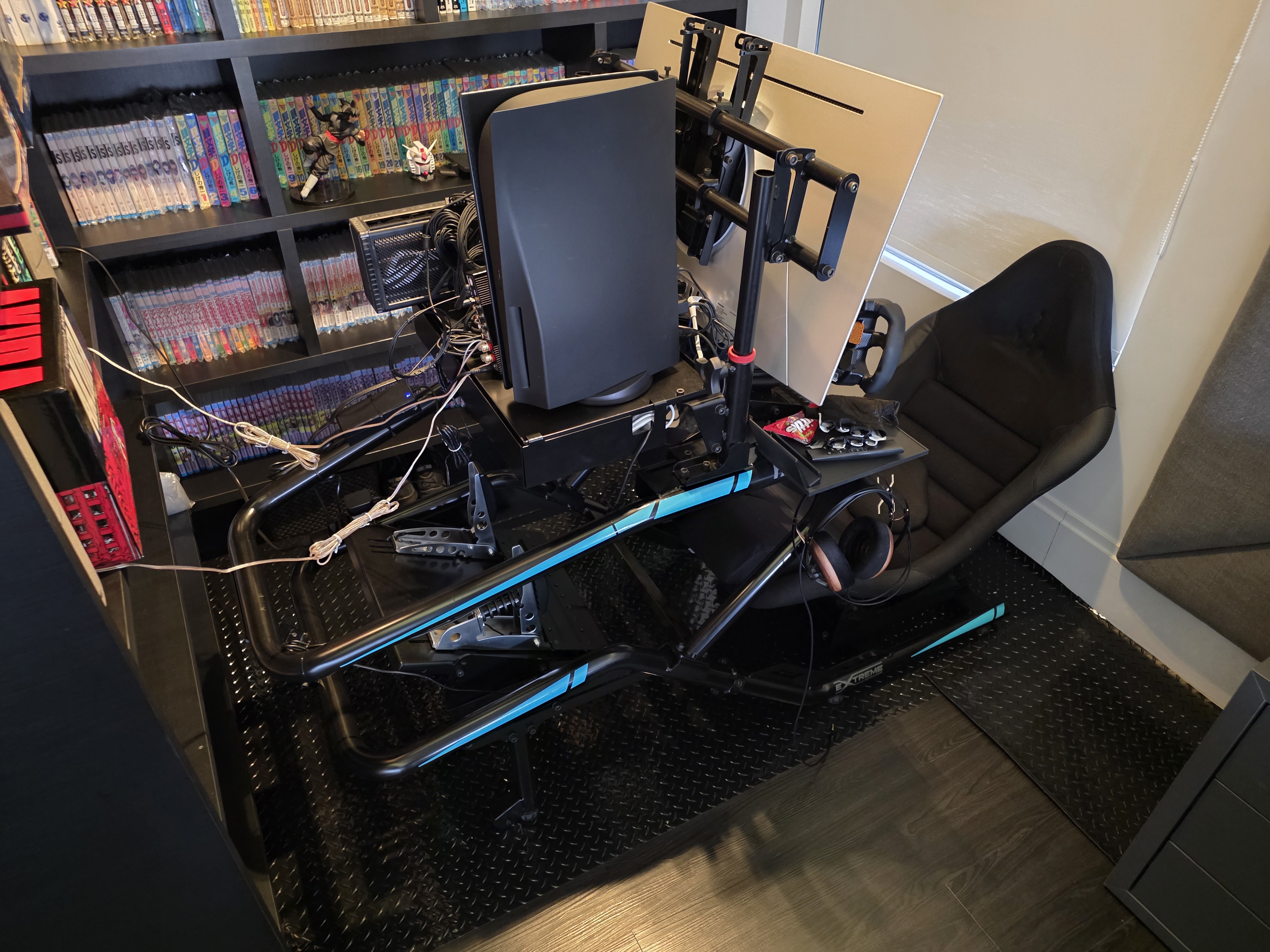
The FX1 is very different from traditional cockpits. The whole structure is welded thick steel tubing. When I say it doesn’t shake, I mean it doesn’t shake at all. Zero wobble. It’s a brutal difference compared to a stand in front of the couch. The driving position is reclined, F1-style — your feet are at the same height or higher than your hips. You’d think it would be uncomfortable, but it isn’t. You can sit there for hours without complaining. It comes with a padded adjustable seat, an articulating monitor mount, a tilt-adjustable pedal mount, and a height-adjustable wheel mount.
I had to wait about a month for delivery. In the meantime, as anyone who follows my blog knows, I dove into a 16-hour-a-day marathon testing the new AI agents from Anthropic and OpenAI — check the #vibecoding and #agents tags to see everything I built. After about 30 days of that insane marathon, my lower back gave out and I started developing what looks like a herniated disc. I had to see a doctor and take heavy anti-inflammatories.
And right that week, the cockpit decided to arrive.
The build
I was in absurd pain, but I built the cockpit anyway. It took an entire day to unbox and assemble the heavy steel pieces with my back screaming, but I did it.
The official assembly video I followed:
The McLaren GT3 V2 wheel
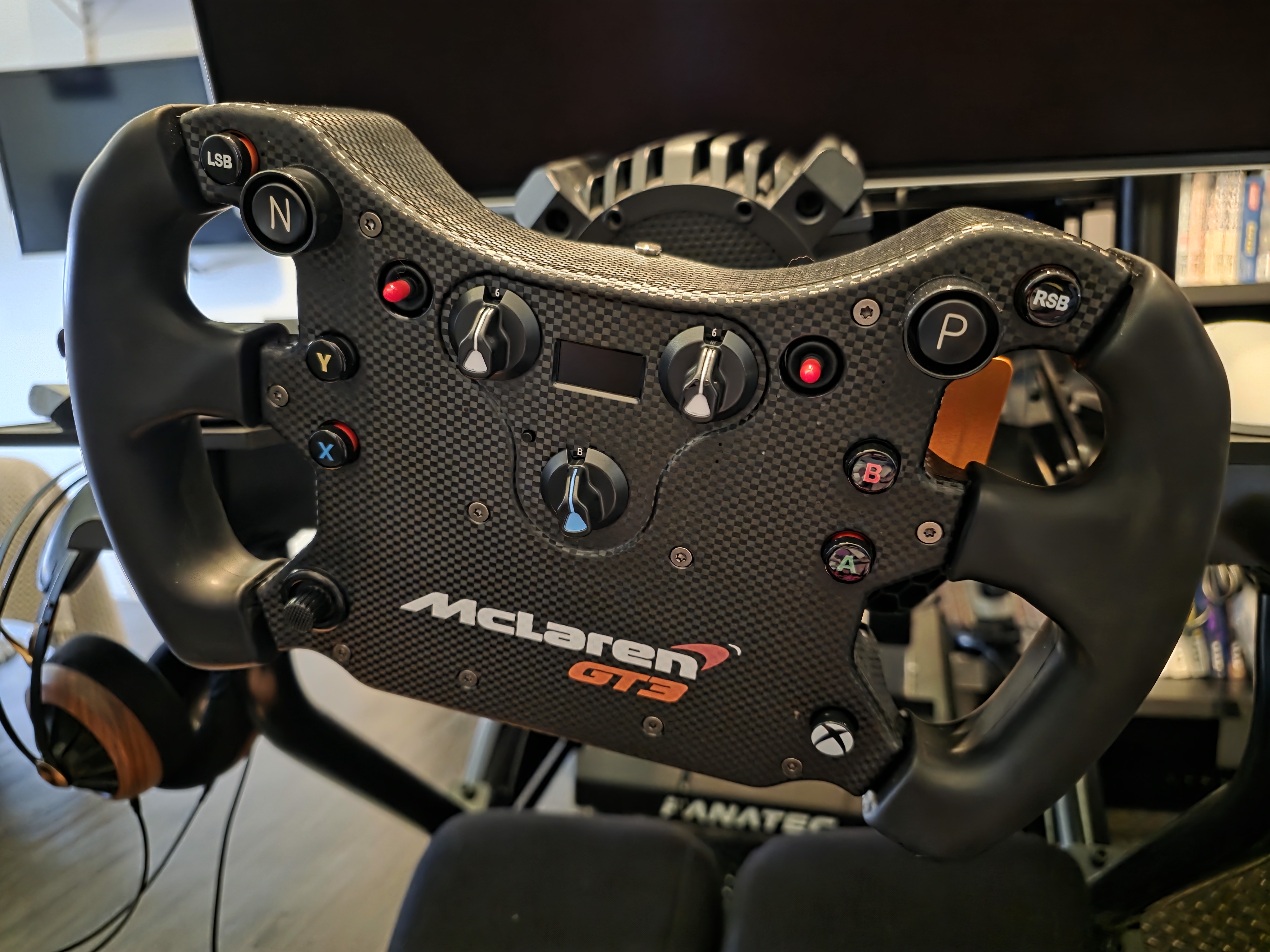
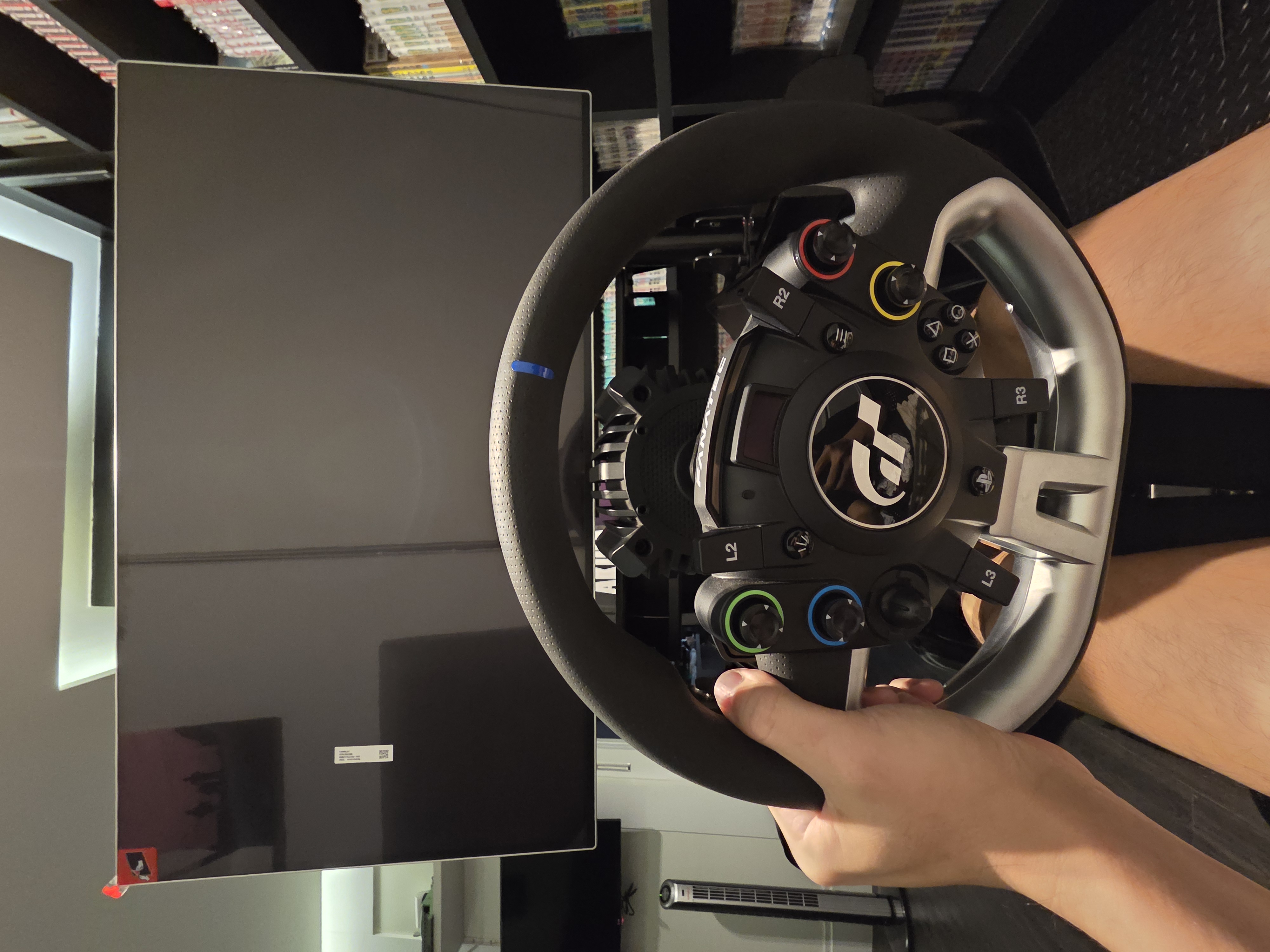
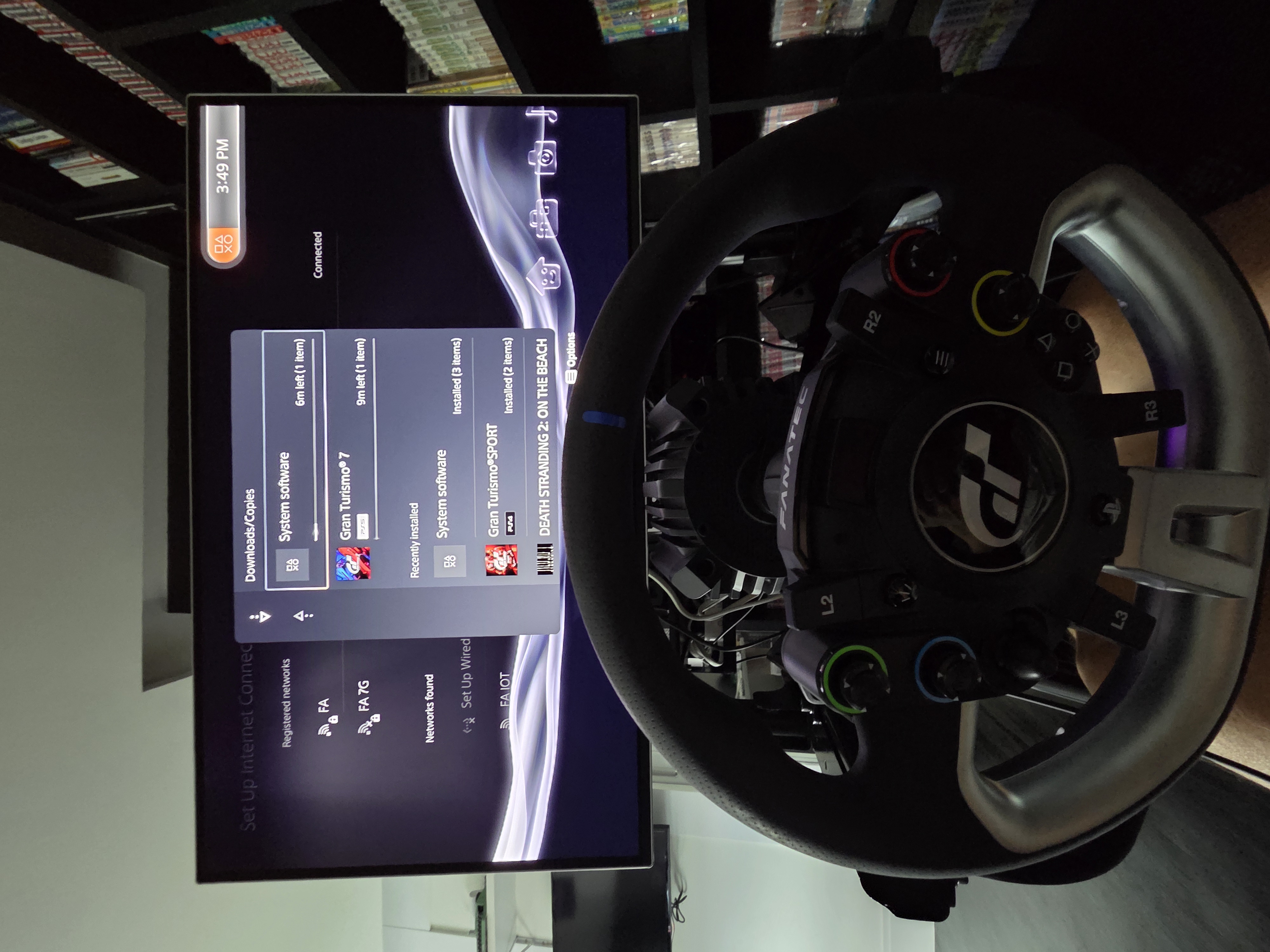
After assembling the cockpit, I decided that the standard wheel that comes with the CSL GT kit wasn’t enough. I upgraded to the Fanatec CSL Elite McLaren GT3 V2 (~R$ 4,990). It’s a 1:1 scale replica of the McLaren GT3 wheel, with carbon fiber, an OLED display, and compatibility with PC, Xbox, PS4 and PS5.
What I like most about it: it has the normal shift paddles behind it (shift up/down), but it also has two additional analog paddles that can be configured in four different modes. In mode B, which is what I use, the left paddle works as an analog handbrake and the right one as an analog clutch. That’s perfect for rally — I can pull the handbrake mid-corner without taking my hand off the wheel. It also has two 2-position toggles, two 12-position rotaries, 7 standard buttons with interchangeable caps, and Fanatec’s 7-direction FunkySwitch. It’s a complete racing controller.
The final setup
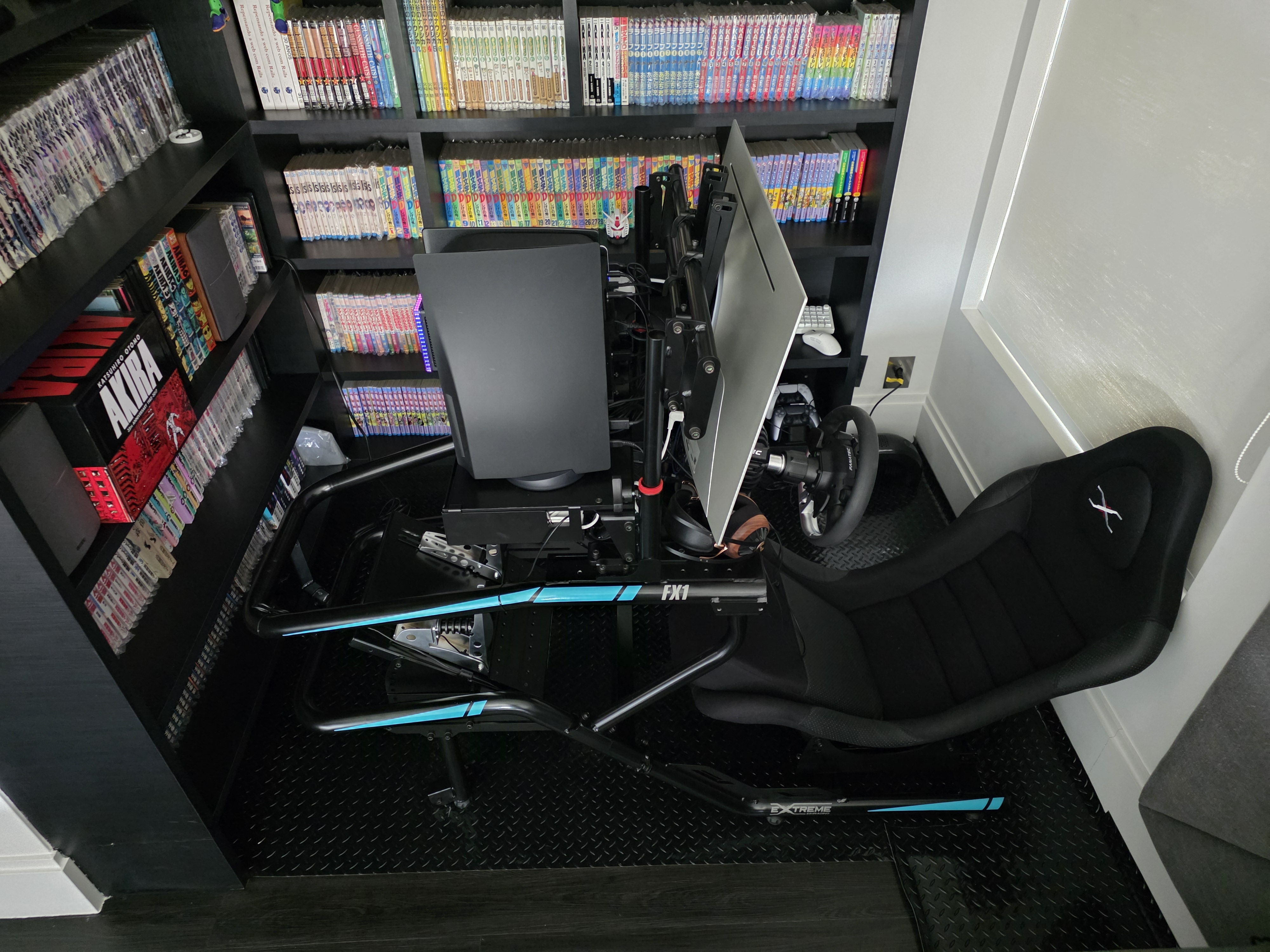
The cockpit ended up in a corner of my bedroom, between the manga shelves (you can spot Akira, Initial D, and 500-something other volumes in the background). I mounted the mini-PC and the PS5 on the cockpit’s side structure, together with the eGPU and the RTX 4090. Everything stays permanently connected. That’s what makes the difference: I no longer have to set anything up or take it down. I sit, turn it on, and I’m driving in 30 seconds.
The audio system
To round out the setup I needed dedicated audio. I didn’t want to use the monitor’s audio (terrible) and I didn’t want to be on a headset all the time. The fix was to build a separate audio system with HDMI audio extraction.
The centerpiece is an HDMI 2.1 switcher from OREI with audio extraction. It has 2 inputs and 1 HDMI output, supports 4K at 120Hz (48 Gbps of bandwidth), and extracts the audio through optical TOSLINK and 3.5mm. I connect the HDMI output of the RTX 4090 to one input and the PS5 to the other. Video goes to the monitor. Audio goes out through the optical port.
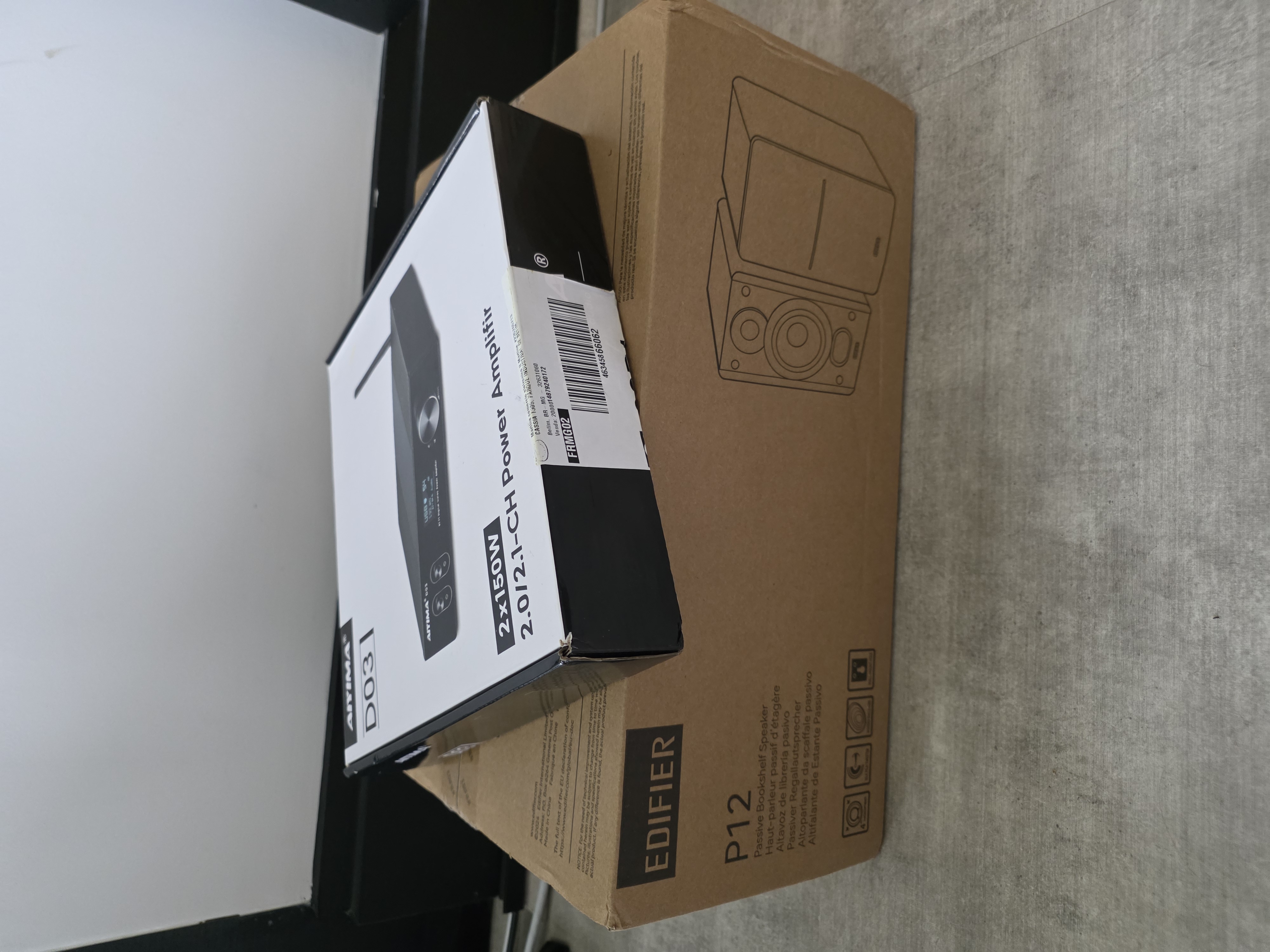
The optical audio goes to an Aiyima D03 amplifier, a compact 2.1 channel amp with 150W per channel, integrated DAC (PCM1808 chip), and Bluetooth 5.0 with aptX HD. It has optical, coaxial, USB, RCA and Bluetooth inputs. It even has a dedicated subwoofer output for when I get around to adding one. It uses Texas Instruments’ TAS5624 amplifier chip and has bass and treble control through the remote. For a cockpit setup where you’re 1 meter from the speakers, 150W is more than enough.
In practice, I keep the amp at 50% and Windows volume at 50%, and that’s already loud as hell. Which is to say: this isn’t a “good enough” little system. It’s set up to actually go loud if I want.
The speakers are Edifier P12, passive, with a 4-inch woofer and a 19mm tweeter. Frequency response from 55Hz to 20kHz, 6 ohm impedance, 20W RMS each. The MDF cabinet with wood finish has a rear bass-reflex port that helps the lows. For passive speakers this size, they deliver well. The mid-range is clean and the highs don’t distort even at high volume.
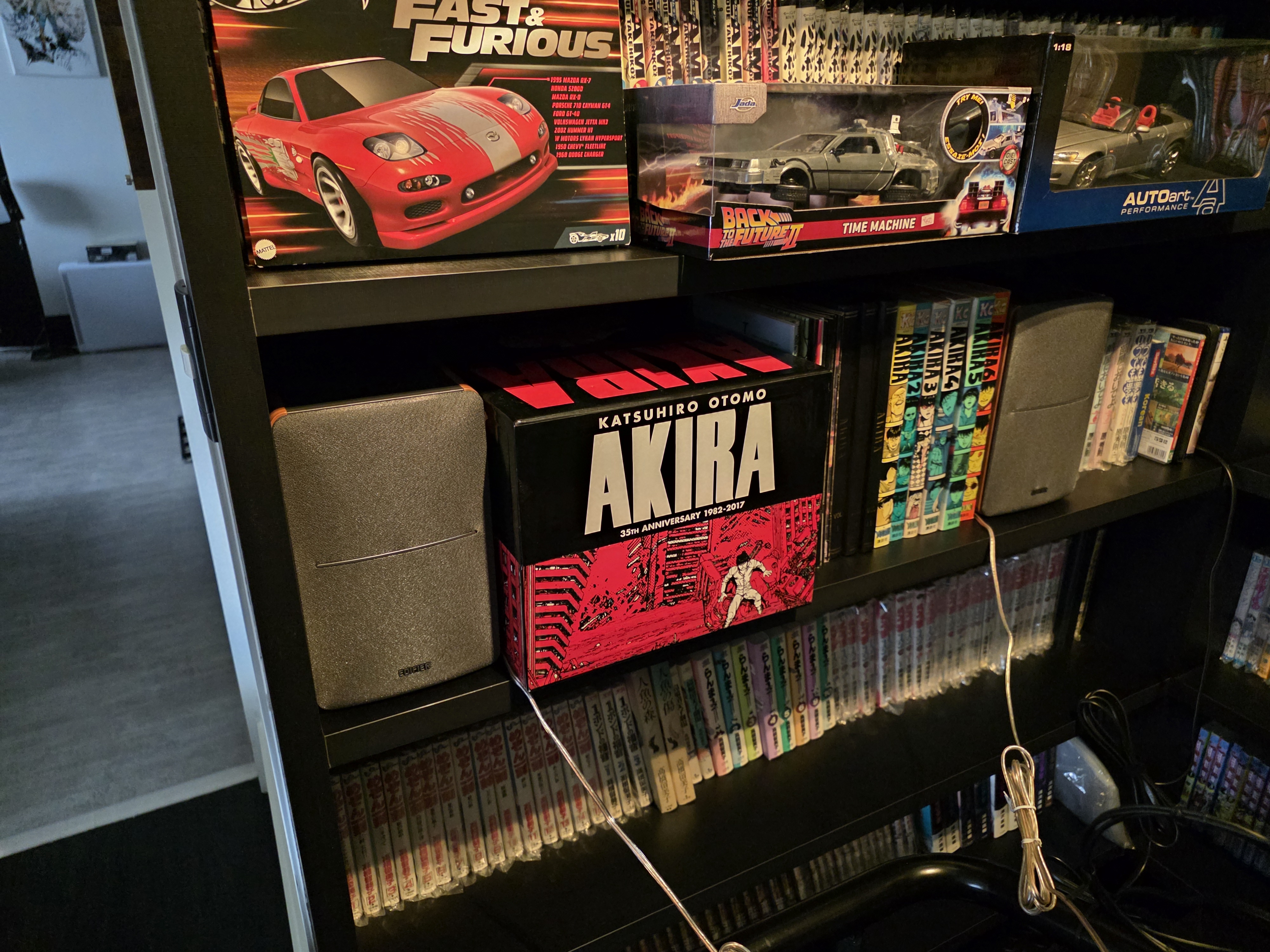
The setup logic is: HDMI switcher handles the switching between PS5 and PC, extracts audio to optical, the amp converts and amplifies, and the passive speakers deliver the sound. All without having to touch the monitor or swap cables. I press a button on the switcher and switch consoles.
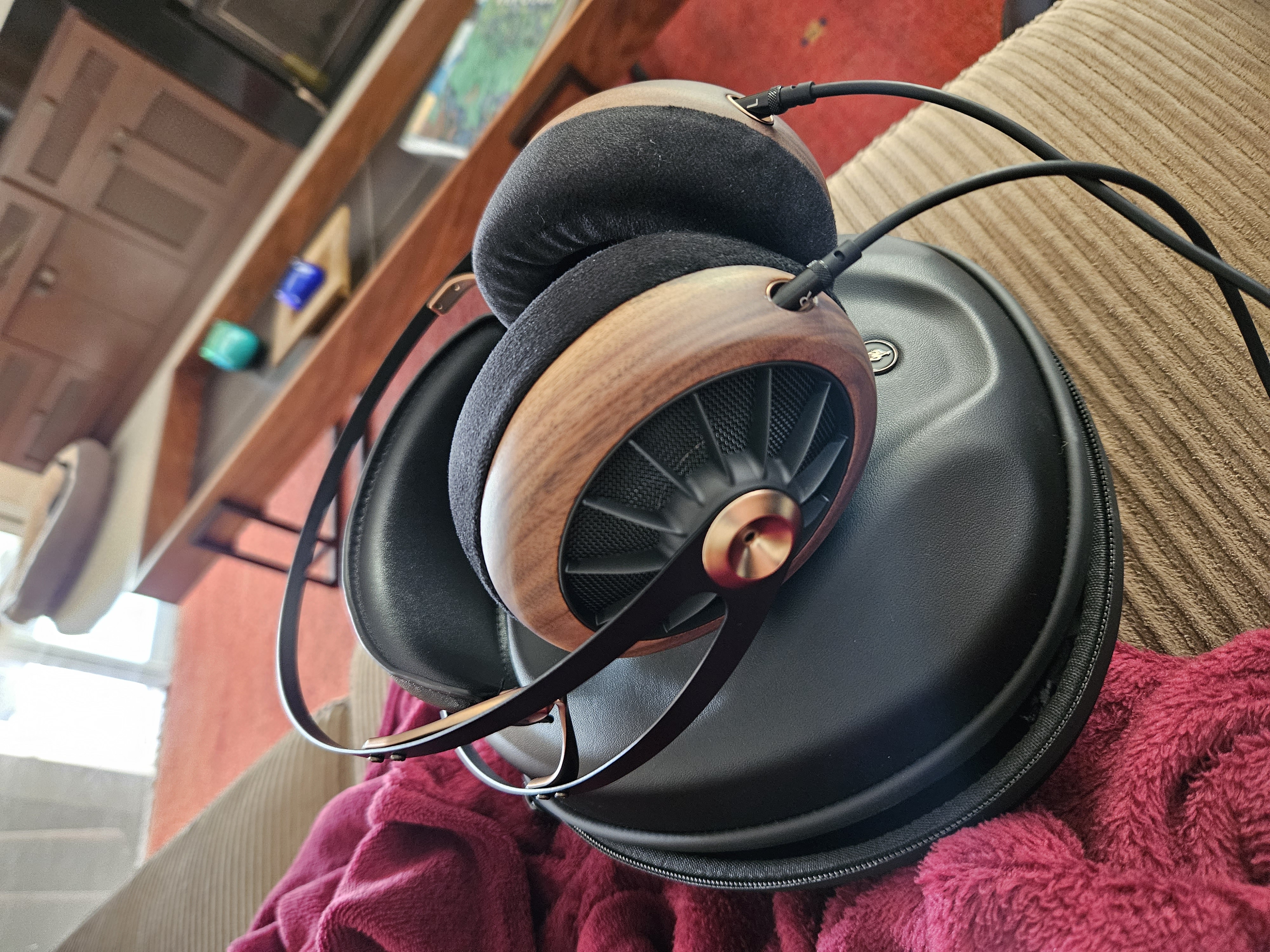
When I want to play without bothering anyone, I plug my Meze 109 Pro directly into the 3.5mm output of the HDMI switcher. The Meze 109 Pro is an open-back headphone with 50mm dynamic drivers, 40 ohm impedance, 112 dB SPL/1mW sensitivity, and 5Hz to 30kHz response. The ear cups are walnut wood with handcrafted finish. It’s an audiophile headphone that works perfectly without a dedicated amplifier thanks to the low impedance. The sound is warm, with full bass and rich mids. You can hear every detail of the engines.
I haven’t decided about a subwoofer yet, but it’ll be my next upgrade. A dedicated sub is going to add that low-end weight that makes you feel the engine in your chest.
The verdict
The couch with a stand works. The PC desk with a stand works. But neither comes anywhere close to a dedicated cockpit. The FX1’s steel structure doesn’t move a millimeter, even with the Fanatec direct drive at max torque. The reclined F1 position is comfortable for sessions of hours. The load cell pedals stay firm on the base. The monitor is exactly at the right height and distance. And best of all: it’s always ready. I don’t need to assemble anything, take anything down, run cables, none of it. I sit and I drive.
For anyone who’s wondering whether it’s worth investing in a dedicated cockpit instead of staying with a desk or couch stand: it is. If you already have a direct drive wheel, the cockpit is the missing piece. I spent years thinking “this is fine” with the stand on the couch. It wasn’t fine. The difference in driveability is something else entirely. And for my case — introvert, single-player only, simcade — I couldn’t have built it any sooner. To be honest, I think I’ve finally landed on the simulator setup that’s perfect for my taste.
Shopping list: how much it all cost
Here’s the consolidated list of everything in my current setup, with approximate prices (some were bought in dollars and converted to reais at the time’s exchange rate):
| Item | Estimated Price (R$) | Link |
|---|---|---|
| Cockpit Formula FX1 Black and Green | ~6,290 | Extreme Racing |
| Fanatec Gran Turismo DD Pro 8Nm (motor + wheel + pedals + Boost Kit) | ~9,590 | Fanatec / Racing Wheel Brasil |
| Fanatec CSL Pedals LC (with Load Cell) | ~1,500 | Fanatec |
| Fanatec CSL Elite McLaren GT3 V2 | ~4,990 | Racing Wheel Brasil |
| Fanatec ClubSport Shifter SQ V1.5 | ~2,500 | Fanatec |
| Minisforum UX790 Pro | ~5,000 | Minisforum |
| Minisforum DEG1 eGPU Dock + RTX 4090 | ~12,000 | Minisforum / bought separately |
| PlayStation 5 + dbrand Darkplates | ~4,500 | Sony / dbrand |
| Samsung Odyssey OLED G8 32" | ~2,500 | Samsung |
| OREI BK-21A HDMI 2.1 Switcher 2x1 with audio extraction | ~450 | Amazon |
| Aiyima D03 Amplifier | ~900 | Mercado Livre |
| Edifier P12 (pair) | ~799 | Edifier |
| Meze 109 Pro | ~5,390 | Mercado Livre / Heinrich Audio |
| Cables (HDMI 2.1, optical, 3.5mm, power) | ~300 | Various |
| TOTAL ESTIMATED | ~56,709 |
Yes, almost R$ 57k is a lot of money. I worked like a dog for decades. Now that I’ve managed to retire honestly, my family is well taken care of, I have no debts, and I can finally give myself something I always wanted as a kid but couldn’t afford. When I sat at those OutRun and Daytona USA cabinets at the arcade, I dreamed of having something like this at home. It took 30-something years, but I got there.
And if you add up the years of kludges, stands that didn’t work, 15-meter HDMI cables, 3D prints, machined steel plates, and the frustration of mounting and unmounting everything — a dedicated cockpit saves your sanity. Unlike a PC that depreciates fast, a steel cockpit lasts decades.